Philippines Aviation - Above the National Clouds: Difference between revisions
Created page with "<html> <div style=" width:800px; max-width:100%; margin:0; padding:0; box-sizing:border-box; font-family:Arial,sans-serif; "> <!-- REPOSITORY HEADER IMAGE --> <div style=" width:800px; max-width:100%; margin:0 0 12px 0; padding:0; "> <img src="https://asxresearch.org/images/2/29/Servers.jpg" alt="ASX Academic Paper Repository" style=" display:..." |
No edit summary |
||
| Line 108: | Line 108: | ||
<div style="padding:18px 20px; font-size:16px; line-height:1.65;"> | <div style="padding:18px 20px; font-size:16px; line-height:1.65;"> | ||
<h2 style="font-family:Arial,sans-serif; text-align:center; margin-top:0;"> | <h2 style="font-family:Arial,sans-serif; text-align:center; margin-top:0;">Politics Above the Clouds: Philippine Government, National Aviation Policy, and an Industry at a Crossroads</h2> | ||
<p style="text-align:center;"> | <p style="text-align:center;"> | ||
Albert N. Clark<br> | Albert N. Clark<br> | ||
Independent Author<br> | Independent Author<br> | ||
Published: September | Published: September 5, 2026<br> | ||
ASX Research Journal and Database<br> | ASX Research Journal and Database<br> | ||
ISSN 3068-3351 (Online)<br> | ISSN 3068-3351 (Online)<br> | ||
| Line 133: | Line 133: | ||
<p> | <p> | ||
This article examines the political, institutional, economic, and strategic forces shaping Philippine aviation policy at a moment of rapid infrastructure expansion and political uncertainty. It traces the evolution of aviation liberalization, airport governance, public-private partnerships, foreign investment, national and local government roles, regulatory reform, and defense considerations, with particular attention to the Marcos administration, Congress, the Department of Transportation, and the Civil Aviation Authority of the Philippines. It also evaluates the implications of major airport and air-navigation initiatives, including NAIA, Sangley, Subic, provincial airport development, and proposed reforms to CAAP and air navigation services. The analysis considers the ongoing impeachment proceedings involving Vice President Sara Duterte but finds no evidence that the proceedings have directly disrupted current aviation projects, while identifying broader risks associated with political continuity, institutional capacity, investor confidence, and the 2028 transition. The article argues that the long-term success of Philippine aviation will depend less on individual projects than on regulatory independence, transparent governance, resilient institutions, technical competence, and policy continuity across administrations. | |||
</p> | </p> | ||
<p><i>Keywords:</i> Philippine aviation, airport | <p><i>Keywords:</i> Philippine aviation policy, airport governance, public-private partnerships, CAAP reform, political continuity</p> | ||
<h3 style="font-family:Arial,sans-serif; text-align:center;"> | <h3 style="font-family:Arial,sans-serif; text-align:center;">Politics Above the Clouds: Philippine Government, National Aviation Policy, and an Industry at a Crossroads</h3> | ||
<p> | <p> | ||
Philippine aviation has never been merely a transportation sector; it has been an instrument of state-building, territorial integration, economic policy, and political authority across an archipelago whose geography makes aviation unusually consequential. For much of the twentieth century, the national government exercised substantial control over routes, carriers, airport development, and access to international markets, reflecting the broader East Asian pattern in which aviation was treated as a strategic national industry rather than an ordinary competitive market. Bowen and Leinbach (1995) documented how East Asian governments progressively moved from protecting national carriers toward liberalization, privatization, new entry, and reduced control over fares and routes, with the Philippines participating in that transition. Executive Order No. 219 in 1995 formalized a Philippine policy of liberalizing domestic and international civil aviation, while later reforms culminated in Republic Act No. 9497 in 2008, which abolished the Air Transportation Office and created the Civil Aviation Authority of the Philippines (CAAP) as an independent regulatory body attached to the transportation department for policy coordination. The significance of that history is easy to underestimate: the contemporary Philippine aviation system was deliberately redesigned from a government-operated transportation service toward a regulated, commercially competitive network, yet substantial pieces of the old state-operator model survived inside the new structure. That institutional inheritance now lies beneath many of the political questions facing the Marcos administration. | |||
</p> | </p> | ||
<p> | <p> | ||
The | Liberalization did not stop with domestic competition. The Philippines progressively opened international access beyond Manila, while the ASEAN project attempted to turn Southeast Asia into a more integrated aviation market. Alan Khee-Jin Tan (2010) showed that the ASEAN Multilateral Agreement on Air Services represented an important move toward open skies but remained constrained by unresolved questions of sovereignty, ownership, competition policy, safety harmonization, and the extent of traffic rights. Those limitations remain remarkably relevant. A government can legally open an airport to foreign services, but liberalization means little if runway capacity, terminals, customs processing, navigation systems, or ground transport cannot accommodate the resulting traffic. Hanaoka, Takebayashi, Ishikura, and Saraswati (2014) demonstrated that liberalization and low-cost-carrier expansion alter fares, frequencies, profitability, and network competition throughout ASEAN rather than merely affecting an individual route. Laplace, Lenoir, and Roucolle (2019) similarly found potentially substantial economic benefits from ASEAN aviation liberalization for the Philippines. The political lesson is that Philippine aviation policy has gradually shifted from deciding who may fly toward deciding whether the physical and regulatory system can support those who wish to fly. Manila congestion therefore is not simply an airport inconvenience; it can function as a practical barrier to a liberalization policy that formally exists on paper. | ||
</p> | </p> | ||
<p> | <p> | ||
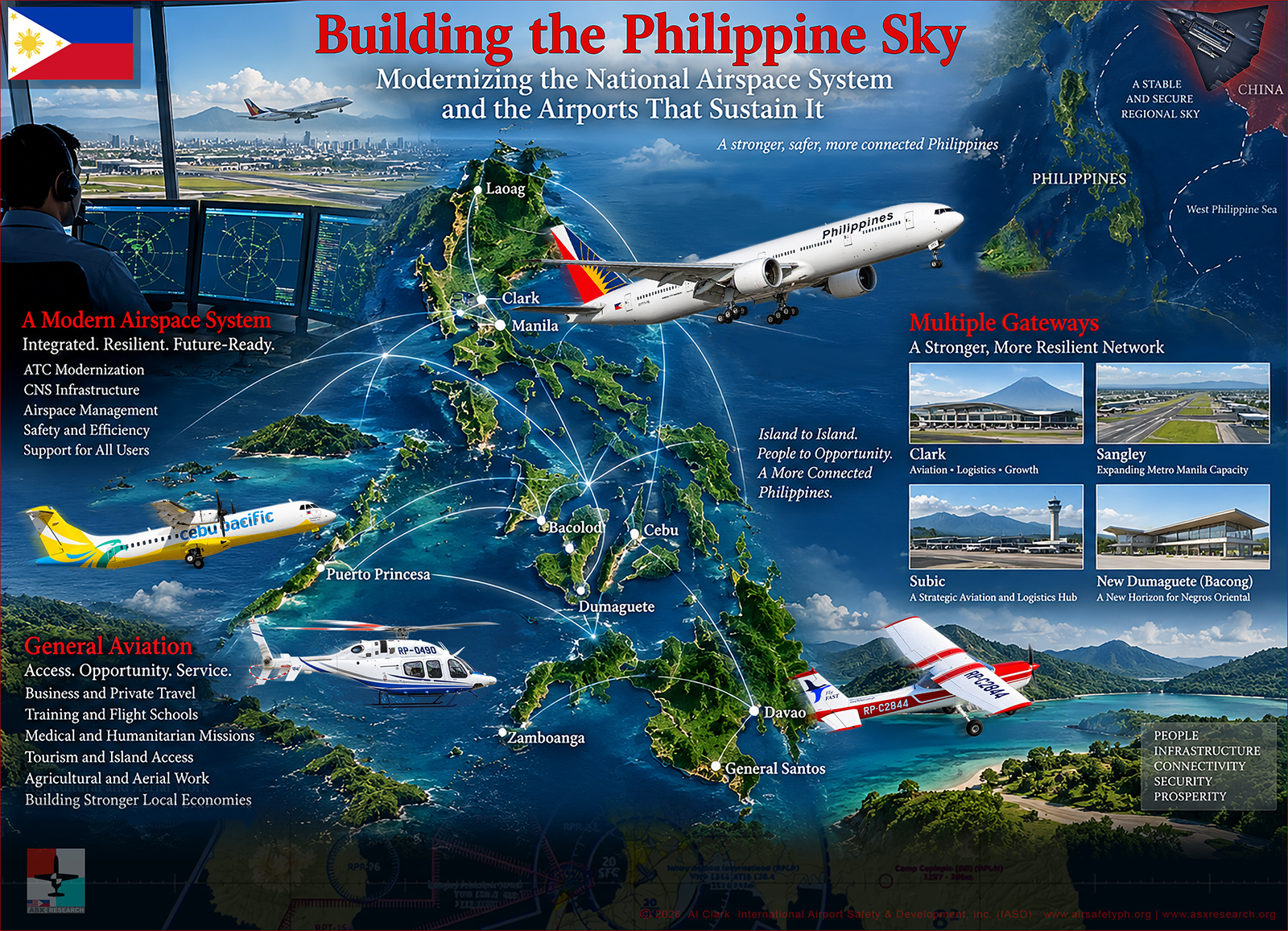
The | The Marcos administration has inherited that contradiction and is attempting something broader than construction of individual airports: it is assembling a distributed aviation-capacity strategy in which Metro Manila, Clark, provincial gateways, and strategically located secondary airports increasingly operate as parts of a national network. The 2026 national budget alone assigns ₱6.2 billion to the Department of Transportation’s Aviation Infrastructure Program, including ₱2.5 billion for New Dumaguete Airport, alongside funding for Tacloban, Laoag, New Naga, Ormoc, Busuanga, New Manila International Airport, Kalibo, Bukidnon, Antique, Central Mindanao, and Catbalogan. This resembles neither the Aquino-era emphasis on PPPs nor the Duterte-era preference for budget and official-development-assistance financing in pure form. Ito (2018) argued that the Philippine infrastructure debate was never appropriately reduced to “PPP versus ODA,” because effective development depends on complementary financing, institutional capacity, risk allocation, regulatory credibility, and bankable projects. Marcos-era aviation increasingly looks like precisely such a hybrid: direct public appropriations, foreign development assistance, government-owned airport authorities, concessions, unsolicited proposals, private airport operators, and foreign technical partners operating simultaneously. Politically, that diversification is valuable because no single funding source determines the entire program; administratively, however, it creates a far more difficult coordination problem. | ||
</p> | </p> | ||
<p> | <p> | ||
The most conspicuous manifestation of that strategy is the use of public-private partnerships. Republic Act No. 11966, the PPP Code, created a consolidated framework for national and local PPPs, and the NAIA concession became the first PPP contract awarded after the new code took effect. In March 2024, the Department of Transportation and Manila International Airport Authority signed the concession with the consortium that became New NAIA Infra Corp., combining San Miguel interests with RMM Asian Logistics, RLW Aviation Development, and Incheon International Airport Corporation. Cruz and Marques (2011) emphasize an important distinction that Philippine political discussion sometimes obscures: a long-term airport concession is not necessarily privatization in the sense of permanently selling a public asset. Ownership, operating rights, investment obligations, revenue risk, pricing power, and eventual reversion can be separated contractually. That means the political responsibility of government does not disappear when a private operator enters the terminal; it changes form. Government must become exceptionally good at contract design, economic regulation, performance measurement, enforcement, safety oversight, and renegotiation. A weak public operator can sometimes be replaced. A weak public contract manager can lock an entire airport system into poor incentives for decades. | |||
</p> | </p> | ||
<p> | <p> | ||
That distinction becomes more important as private capital spreads beyond NAIA. Laguindingan and Bohol-Panglao have moved into concession structures, negotiations or proposals have touched Puerto Princesa, Davao and other airports, and Subic International Airport entered the comparative-challenge stage in August 2026 for modernization, expansion, operation, and maintenance by a private partner. Cruz and Sarmento (2017) caution that airport privatization or concessioning should not be justified simply by the attractiveness of immediate government revenue, because maximizing concession proceeds can conflict with passenger welfare and long-term efficiency. Oum, Adler, and Yu (2006), examining airport ownership models internationally, likewise found that ownership structure affects profitability and efficiency but did not establish a simplistic rule that private ownership is always superior to every public alternative. The Philippine issue is therefore not ideological—public versus private—but contractual. An airport concession can mobilize capital, technology, management expertise, and commercial discipline that government may struggle to provide, yet the public sector remains responsible for ensuring that fees, capacity investments, service quality, emergency obligations, competition, and safety remain aligned with national interests. | |||
</p> | </p> | ||
<p> | <p> | ||
The most | The most consequential PPP proposal may ultimately be one passengers never see. CAAP’s 2025 accomplishment report records an unsolicited proposal involving the entire Air Navigation Services of the Philippines, with negotiations having begun in November 2025. Air navigation is categorically different from retail concessions, parking, terminals, or even runway maintenance: it is a safety-critical national service governing separation of aircraft, communications, navigation, surveillance, aeronautical information, contingency operations, and the functioning of sovereign airspace. In, Casemiro, and Kim (2017) frame private airport participation as a principal-agent problem in which private profit incentives must be reconciled through ownership design, risk allocation, government control, and clear public objectives. That logic becomes even more demanding when applied to air traffic services. Any Philippine ANSP restructuring should preserve an unmistakable separation between the entity being economically rewarded for providing services and the authority responsible for certifying, auditing, investigating, and enforcing safety performance. Cybersecurity, military coordination, disaster continuity, staffing resilience, data sovereignty, surveillance coverage, fee-setting, and the ability to operate during national emergencies must also be treated as primary design requirements rather than contractual footnotes. If the Philippines gets this right, it could modernize a neglected part of the aviation system; if it gets it wrong, the country could privatize operational incentives faster than it modernizes oversight. | ||
</p> | </p> | ||
<p> | <p> | ||
That brings the deepest institutional issue into view: CAAP itself. Republic Act No. 9497 calls CAAP an independent regulatory body, but CAAP also remains intertwined with airport operation and air-navigation service provision, producing an institutional architecture in which regulator, service provider, and infrastructure operator are not always as cleanly separated as mature regulatory theory would prefer. The problem is not theoretical. CAAP’s Philippine Aviation Safety Plan 2025–2027 reports an overall ICAO effective-implementation score of 68.99 percent, with air navigation services at 45.28 percent, aerodromes and ground aids at 45.87 percent, and particularly weak implementation in surveillance and resolution of safety concerns; CAAP has established targets to raise those areas substantially by late 2026. Congress is simultaneously considering structural reform: House bills filed in 2025 would create either a Philippine Airports Authority or Philippine Airports Corporation, while Senate Bill No. 1650 seeks to strengthen CAAP itself. Oum, Adler, and Yu’s (2006) international evidence suggests that governance structure matters at least as much as the simplistic public-private label. The potentially transformative Philippine reform, therefore, may not be another terminal at all; it may be finally separating airport commerce, air-navigation service provision, and independent safety regulation so each institution can be judged against a clear mission. | |||
</p> | </p> | ||
<p> | <p> | ||
Congress consequently sits much closer to the cockpit of aviation policy than is visible from airport ribbon-cuttings. It authorizes appropriations, modifies CAAP’s legal authority, considers creation of new airport institutions, shapes franchises and investment rules, reviews public corporations, and can influence the allocation and continuity of infrastructure projects extending far beyond a presidential term. That creates opportunities for democratic oversight but also exposes aviation development to the broader political economy of Philippine legislative government. Mendoza, Yap, Mendoza, Jaminola, and Yu (2022) found that relationships among political dynasties, business interests, and development outcomes vary significantly across Philippine regions rather than following one universal pattern; competitive business environments and local economic structure can materially alter how political concentration affects development. Aviation infrastructure deserves particular vigilance because airports create enormous surrounding land values, logistics opportunities, construction contracts, commercial concessions, and political visibility. The appropriate conclusion is not that a particular airport is corrupt because politicians support it—that would require evidence—but that airport policy must be designed to withstand patronage incentives. Transparent project appraisal, competitive procurement, published concession obligations, independent economic regulation, land-use disclosure, and measurable performance targets protect worthwhile projects from both actual capture and the suspicion of it. | |||
</p> | </p> | ||
<p> | <p> | ||
Local government adds another layer rarely appreciated in national aviation debates. Sangley Point International Airport illustrates it vividly: what began as a Cavite-led local PPP has become important enough that President Marcos issued Administrative Order No. 44 in August 2026 directing national agencies, the provincial government, and private partners to accelerate coordination. The order creates a joint technical working group co-chaired by DOTr and the Philippine Reclamation Authority, with CAAP, the Department of National Defense, environmental regulators, justice and interior officials, and Cavite participating; CAAP retains technical and regulatory responsibilities, while DOTr is charged with integrating Sangley into the Greater Capital Region Airport System. Capuno (2011) found that Philippine decentralization can stimulate meaningful local-government innovation and that leadership quality, political incentives, and fiscal resources influence that capacity. Omori and Alagon (2020), although studying health governance rather than aviation, demonstrate more broadly how Philippine public services operate through polycentric systems in which authority is distributed across national and local institutions. Sangley therefore may become an important governance experiment as well as an airport: a test of whether a strategically significant aviation project can originate locally while remaining coherently embedded in national airspace, environmental, defense, transport, and safety policy. | |||
</p> | </p> | ||
<p> | <p> | ||
Decentralization can also determine whether provincial aviation becomes genuine economic infrastructure or a collection of disconnected capital projects. Airports such as New Dumaguete, Busuanga, Laoag, Tacloban, Bukidnon, and Central Mindanao are not merely miniature versions of NAIA; they exist within local tourism markets, road systems, disaster networks, agricultural economies, training ecosystems, hospitals, local political structures, and land-use regimes. Canare and Francisco (2019) show that decentralization entails a fundamental tradeoff: local governments possess information advantages concerning local needs, while central government often possesses stronger economies of scale and access to resources. That tension maps almost perfectly onto airport development. A province may understand where aviation access can unlock tourism or commerce, but national authorities control airspace integration, certification, navigation infrastructure, strategic network planning, and much of the financing. The future Philippine airport system therefore needs a national hierarchy based on function rather than political prestige: metropolitan gateways, regional connectors, tourism gateways, logistics airports, general-aviation facilities, military-civil interfaces, training airports, and emergency lifelines should be funded according to demonstrable network value. Otherwise decentralization can produce the politically attractive illusion that every jurisdiction needs a major airport while failing to fund the smaller facilities whose connectivity may actually matter more. | |||
</p> | </p> | ||
<p> | <p> | ||
Foreign investment is simultaneously becoming less peripheral to that network. Executive Order No. 113, effective May 2, 2026, implemented the Thirteenth Regular Foreign Investment Negative List; consistent with amendments to the Public Service Act, airports and certain transport services are excluded from the definition of public utilities, permitting up to 100 percent foreign ownership where other restrictions do not apply. That policy intersects with a broader effort to turn Clark and other Philippine aviation locations into international logistics, maintenance, technology, and investment nodes rather than passenger terminals alone. Such openness can bring capital, technical capability, global supply-chain integration, and management expertise, but it also raises questions about ownership of strategically important infrastructure, data, maintenance capability, land, and dependency on foreign firms. Drope, Chavez, Lencucha, and McGrady (2014) provide a useful corrective to simplistic fears of foreign capital: their Philippine research found that even powerful multinational investment does not automatically translate into regulatory capture, because domestic institutions, coalitions, law, and political competition can constrain corporate influence. The aviation policy challenge is therefore to welcome foreign investment without outsourcing sovereign judgment. Foreign ownership should expand capability; it should not weaken CAAP’s safety authority, competition policy, national-security review, or the government’s ability to sustain aviation services during geopolitical or commercial disruption. | |||
</p> | </p> | ||
<p> | <p> | ||
Clark | Defense and foreign policy now complicate aviation policy further because Philippine airspace and airport geography increasingly overlap with Indo-Pacific strategy. Clark and Subic occupy obvious logistics and historical positions; military facilities associated with the Enhanced Defense Cooperation Agreement add another layer of airfield access, prepositioning, exercises, and strategic mobility; and Sangley’s development formally requires participation by the Department of National Defense. This does not mean civilian airport modernization is secretly a military program, and the evidence does not justify treating every runway as a defense installation. The more defensible conclusion is that national aviation resilience now has a dual-use dimension. A second runway that preserves commercial operations after pavement failure can also strengthen national logistics resilience. Better radar, communications, cyber defenses, fuel storage, weather systems, cargo handling, emergency planning, and alternate-airport capacity serve civil aviation while increasing the country’s ability to function during earthquakes, typhoons, regional confrontation, or closure of a major hub. Bowen and Leinbach (1995) observed that aviation liberalization in East Asia remained deeply conditioned by the state even as markets opened; three decades later, strategic geography is reminding the Philippines why. The difficult policy task is to maintain an unmistakable civil-safety regime while ensuring that airspace planning among CAAP, the Philippine Air Force, defense authorities, foreign partners, and civilian operators is sufficiently integrated for a region in which security conditions can change far faster than airports can be built. | ||
</p> | </p> | ||
<p> | <p> | ||
The | The political economy beneath those projects deserves equal attention. Mendoza, Beja, Venida, and Yap (2016) found measurable associations between political dynasties and poverty in the Philippines, while later work by Mendoza and colleagues showed that the relationship is mediated by regional economic structure rather than being mechanically uniform. That matters to aviation because large transport projects can become both development instruments and distributive political assets. A new airport can genuinely reduce isolation, attract investment, raise land values, create employment, support medical transport, and connect a regional economy; the same project can also become attractive to political actors precisely because those benefits—and the contracts, land conversions, and visibility surrounding them—are geographically concentrated. Wijaya and Camba (2023) caution that PPP infrastructure should not be imagined as a politically neutral technocratic exercise: public and private capital interact through institutions, risk allocation, and development strategies that can conceal as well as resolve political choices. The Philippine safeguard is therefore not to remove politics from airports, which is impossible, but to make the politics auditable. Decisions about where airports go, who pays, who bears demand risk, who benefits from surrounding development, how concession extensions are granted, and what performance failures trigger penalties should survive examination regardless of which party, dynasty, corporation, or administration happens to benefit. | ||
</p> | </p> | ||
<p> | <p> | ||
The | The impeachment of Vice President Sara Duterte must be treated with exactly that evidentiary discipline. As of September 5, 2026, impeachment proceedings remain a major national political conflict: the House approved and transmitted Articles of Impeachment to the Senate, and the Supreme Court on August 5 dismissed challenges to the 2026 House proceedings as moot because transmission had already occurred. Duterte faces allegations including misuse of public funds and threats, which she denies; on September 5 she posted bail in a separate grave-threats case arising from 2024 remarks that also figure in the political controversy surrounding the impeachment. What the evidence does not presently demonstrate is equally important: there is no substantiated basis for claiming that the impeachment itself has delayed New Dumaguete Airport, changed a CAAP safety regulation, disrupted NAIA’s concession, stopped Sangley, altered Subic’s comparative challenge, or caused an aviation investor to withdraw. Indeed, important aviation actions have continued during the political conflict, including the August acceleration of Sangley and the August opening of Subic’s comparative challenge. Consequently, the responsible conclusion is not that impeachment is currently damaging Philippine aviation. Its significance lies in the institutional stress it creates around a government whose aviation commitments extend beyond the individuals now fighting within it. | ||
</p> | |||
<p> | |||
The more serious aviation risk is therefore indirect and forward-looking. Political conflict can consume legislative bandwidth, complicate budget bargaining, alter appointments, reshape alliances, change foreign-policy orientation, influence local-national cooperation, or raise investor uncertainty about what survives the 2028 presidential transition. Long-duration airport concessions magnify that problem because aviation infrastructure operates on a political timescale radically different from elections: terminals, runways, air-navigation systems, and concessions can remain in service for thirty, forty, or fifty years while presidents serve six. Cruz and Sarmento (2017) show why infrastructure contracts designed around short-term fiscal or political incentives can create long-term welfare problems, while In, Casemiro, and Kim (2017) emphasize the importance of ex-post public control after private participation begins. The most valuable political achievement of the Marcos administration would therefore not be completing every project before leaving office—an impossible standard—but institutionalizing them strongly enough that a successor cannot casually derail sound projects or preserve unsound ones for political reasons. Independent regulators, transparent concession contracts, credible dispute mechanisms, published performance indicators, legally protected safety functions, multiyear financing, and technically justified airport master plans are essentially anti-instability technologies: they convert policy from a presidential preference into an institution. | |||
</p> | |||
<p> | |||
Another non-obvious vulnerability lies in the relationship between infrastructure abundance and state competence. It is possible for the Philippines to build airports faster than it builds the regulatory, technical, and human systems required to operate them safely and efficiently. CAAP’s own safety-plan figures make that risk tangible, particularly in air-navigation services and aerodrome oversight. The country will need controllers, inspectors, engineers, cybersecurity specialists, meteorologists, rescue and firefighting personnel, safety-management professionals, accident investigators, maintenance technicians, planners, and regulators at the same time that airlines, MRO firms, defense aviation, and foreign employers compete for many of the same skills. Oum, Adler, and Yu (2006) show that organizational form affects airport performance, but organization cannot substitute for professional capacity. Neither can concrete. A politically impressive terminal attached to weak surveillance, inadequate navigation resilience, insufficient inspectors, or an understaffed tower is not modernization; it is an imbalance. The next generation of Philippine aviation policy should consequently treat workforce development, regulator compensation, technical independence, university partnerships, recurrent training, cyber capability, and retention of specialists as infrastructure expenditures in everything but name. | |||
</p> | |||
<p> | |||
The Philippine aviation system is therefore at a genuine crossroads, but not because one administration, one impeachment, one airport, or one foreign relationship will determine its fate. Its future turns on whether several reforms now occurring simultaneously can be made mutually reinforcing: liberalized market access must be matched by physical capacity; PPP expansion by strong contract governance; foreign investment by sovereign regulatory competence; local initiative by national network planning; defense cooperation by protected civilian aviation institutions; airport construction by air-navigation modernization; and political ambition by institutional continuity. The Marcos administration is accelerating Sangley, financing provincial airports, advancing PPPs, opening investment, and presiding over a period in which Congress is actively reconsidering the structure of CAAP and airport governance. Those are substantial opportunities, but they also increase the cost of institutional failure. The ultimate test of Philippine aviation policy will not be whether politicians can build airports; Philippine governments have repeatedly demonstrated that they can launch projects. It will be whether the country can build an aviation system whose safety, investment logic, connectivity, regulatory independence, strategic resilience, and national purpose remain coherent after the politicians who launched those projects have left office. Politics will always exist above the clouds. The objective should be to ensure that Philippine aviation is governed by it without becoming captive to it. | |||
</p> | </p> | ||
| Line 199: | Line 211: | ||
<p> | <p> | ||
Bowen, J. T., & Leinbach, T. R. (1995). The state and liberalization: The airline industry in the East Asian NICs. <i>Annals of the Association of American Geographers, 85</i>(3), 468–493. https://doi.org/10.1111/j.1467-8306.1995.tb01809.x | |||
</p> | |||
<p> | |||
Canare, T., & Francisco, J. P. (2019). Decentralization, fiscal independence, and poverty in the Philippines. <i>Public Budgeting & Finance, 39</i>(4), 94–117. https://doi.org/10.1111/pbaf.12241 | |||
</p> | |||
<p> | |||
Capuno, J. J. (2011). Incumbents and innovations under decentralization: An empirical exploration of selected local governments in the Philippines. <i>Asian Journal of Political Science, 19</i>(1), 48–73. https://doi.org/10.1080/02185377.2011.568243 | |||
</p> | |||
<p> | |||
Cruz, C. O., & Marques, R. C. (2011). Contribution to the study of PPP arrangements in airport development, management and operation. <i>Transport Policy, 18</i>(2), 392–400. https://doi.org/10.1016/j.tranpol.2010.12.001 | |||
</p> | |||
<p> | |||
Cruz, C. O., & Sarmento, J. M. (2017). Airport privatization with public finances under stress: An analysis of government and investor’s motivations. <i>Journal of Air Transport Management, 62</i>, 197–203. https://doi.org/10.1016/j.jairtraman.2017.04.007 | |||
</p> | </p> | ||
<p> | <p> | ||
Drope, J., Chavez, J. J., Lencucha, R., & McGrady, B. (2014). The political economy of foreign direct investment—Evidence from the Philippines. <i>Policy and Society, 33</i>(1), 39–52. https://doi.org/10.1016/j.polsoc.2014.03.002 | |||
</p> | </p> | ||
<p> | <p> | ||
Hanaoka, S., Takebayashi, M., Ishikura, T., & Saraswati, B. (2014). Low-cost carriers versus full service carriers in ASEAN: The impact of liberalization policy on competition. <i>Journal of Air Transport Management, 40</i>, 96–105. https://doi.org/10.1016/j.jairtraman.2014.06.008 | |||
</p> | </p> | ||
<p> | <p> | ||
In, S. Y., Casemiro, L. A. S., & Kim, J. (2017). A decision framework for successful private participation in the airport sector. <i>Journal of Air Transport Management, 62</i>, 217–225. https://doi.org/10.1016/j.jairtraman.2017.05.001 | |||
</p> | </p> | ||
<p> | <p> | ||
Ito, S. (2018). PPP vs ODA revisited: Key issues for PPP infrastructure development in the Philippines. <i>Philippine Review of Economics, 55</i>(1–2), 56–86. | |||
</p> | </p> | ||
<p> | <p> | ||
Laplace, I., Lenoir, N., & Roucolle, C. (2019). Economic impacts of the ASEAN single aviation market: Focus on Cambodia, Laos, Myanmar, the Philippines and Vietnam. <i>Asia Pacific Business Review, 25</i>(5), 656–682. https://doi.org/10.1080/13602381.2019.1652979 | |||
</p> | </p> | ||
<p> | <p> | ||
Mendoza, R. U., Beja, E. L., Jr., Venida, V. S., & Yap, D. B. (2016). Political dynasties and poverty: Measurement and evidence of linkages in the Philippines. <i>Oxford Development Studies, 44</i>(2), 189–201. https://doi.org/10.1080/13600818.2016.1169264 | |||
</p> | </p> | ||
<p> | <p> | ||
Mendoza, R. U., Yap, J. K., Mendoza, G. A. S., Jaminola, L., III, & Yu, E. C. (2022). Political dynasties, business, and poverty in the Philippines. <i>Journal of Government and Economics, 7</i>, 100051. https://doi.org/10.1016/j.jge.2022.100051 | |||
</p> | </p> | ||
<p> | <p> | ||
Omori, S., & Alagon, M. (2020). Polycentric governance and the provision of free healthcare services at public hospitals in the Philippines. <i>Health Policy and Planning, 35</i>(8), 983–992. https://doi.org/10.1093/heapol/czaa053 | |||
</p> | </p> | ||
<p> | <p> | ||
Oum, T. H., Adler, N., & Yu, C. (2006). Privatization, corporatization, ownership forms and their effects on the performance of the world’s major airports. <i>Journal of Air Transport Management, 12</i>(3), 109–121. https://doi.org/10.1016/j.jairtraman.2005.11.003 | |||
</p> | </p> | ||
<p> | <p> | ||
Tan, A. K.-J. (2010). The ASEAN multilateral agreement on air services: En route to open skies? <i>Journal of Air Transport Management, 16</i>(6), 289–294. https://doi.org/10.1016/j.jairtraman.2010.01.004 | |||
</p> | </p> | ||
<p> | <p> | ||
Wijaya, T., & Camba, A. (2023). The politics of public–private partnerships: State–capital relations and spatial fixes in Indonesia and the Philippines. <i>Territory, Politics, Governance, 11</i>(8), 1669–1688. https://doi.org/10.1080/21622671.2021.1945484 | |||
</p> | </p> | ||
| Line 258: | Line 286: | ||
<div style="padding:18px 20px; font-size:16px; line-height:1.65;"> | <div style="padding:18px 20px; font-size:16px; line-height:1.65;"> | ||
<h2 style="font-family:Arial,sans-serif; text-align:center; margin-top:0;"> | <h2 style="font-family:Arial,sans-serif; text-align:center; margin-top:0;">Pulitika sa Itaas ng mga Ulap: Pamahalaan ng Pilipinas, Pambansang Patakaran sa Aviation, at Isang Industriyang Nasa Sangandaan</h2> | ||
<p style="text-align:center;"> | <p style="text-align:center;"> | ||
Albert N. Clark<br> | Albert N. Clark<br> | ||
Independent Author<br> | Independent Author<br> | ||
Inilathala: Setyembre | Inilathala: Setyembre 5, 2026<br> | ||
ASX Research Journal and Database<br> | ASX Research Journal and Database<br> | ||
ISSN 3068-3351 (Online)<br> | ISSN 3068-3351 (Online)<br> | ||
| Line 283: | Line 311: | ||
<p> | <p> | ||
Sinusuri ng artikulong ito ang mga puwersang pampolitika, institusyonal, pang-ekonomiya, at estratehiko na humuhubog sa patakaran sa aviation ng Pilipinas sa isang panahon ng mabilis na pagpapalawak ng imprastraktura at kawalang-katiyakan sa politika. Tinatalakay nito ang ebolusyon ng aviation liberalization, airport governance, public-private partnerships, foreign investment, papel ng pambansa at lokal na pamahalaan, regulatory reform, at mga usaping may kaugnayan sa defense, na may partikular na pokus sa Marcos administration, Congress, Department of Transportation, at Civil Aviation Authority of the Philippines. Sinusuri rin nito ang mga implikasyon ng malalaking airport at air-navigation initiatives, kabilang ang NAIA, Sangley, Subic, provincial airport development, at mga panukalang reporma sa CAAP at air navigation services. Isinasaalang-alang ng pagsusuri ang nagpapatuloy na impeachment proceedings laban kay Vice President Sara Duterte ngunit walang nakitang ebidensiya na direktang nakagambala ang mga ito sa kasalukuyang aviation projects, habang tinutukoy ang mas malawak na mga panganib na may kaugnayan sa political continuity, institutional capacity, investor confidence, at 2028 transition. Ipinapangatuwiran ng artikulo na ang pangmatagalang tagumpay ng Philippine aviation ay higit na nakasalalay sa regulatory independence, transparent governance, resilient institutions, technical competence, at policy continuity sa iba’t ibang administrasyon kaysa sa mga indibidwal na proyekto. | |||
</p> | </p> | ||
<p><i>Mga Susing Salita:</i> Philippine aviation, airport | <p><i>Mga Susing Salita:</i> Philippine aviation policy, airport governance, public-private partnerships, CAAP reform, political continuity</p> | ||
<h3 style="font-family:Arial,sans-serif; text-align:center;">Pulitika sa Itaas ng mga Ulap: Pamahalaan ng Pilipinas, Pambansang Patakaran sa Aviation, at Isang Industriyang Nasa Sangandaan</h3> | |||
<p> | |||
Ang Philippine aviation ay hindi kailanman naging simpleng sektor lamang ng transportasyon; naging instrumento ito ng state-building, territorial integration, economic policy, at political authority sa isang kapuluang ang heograpiya ay nagbibigay sa aviation ng pambihirang kahalagahan. Sa malaking bahagi ng ikadalawampung siglo, malaki ang kontrol ng national government sa routes, carriers, airport development, at access sa international markets, na sumasalamin sa mas malawak na pattern sa East Asia kung saan itinuring ang aviation bilang strategic national industry sa halip na ordinaryong competitive market. Idokumento nina Bowen at Leinbach (1995) kung paano unti-unting lumipat ang mga pamahalaan sa East Asia mula sa pagprotekta sa national carriers tungo sa liberalization, privatization, new entry, at pagbawas ng kontrol sa fares at routes, at kabilang ang Pilipinas sa transisyong iyon. Pormal na itinatag ng Executive Order No. 219 noong 1995 ang patakaran ng Pilipinas sa liberalization ng domestic at international civil aviation, habang ang mga sumunod na reporma ay humantong sa Republic Act No. 9497 noong 2008, na nagbuwag sa Air Transportation Office at lumikha sa Civil Aviation Authority of the Philippines (CAAP) bilang independent regulatory body na attached sa transportation department para sa policy coordination. Madaling maliitin ang kahalagahan ng kasaysayang iyon: sadyang muling idinisenyo ang contemporary Philippine aviation system mula sa government-operated transportation service tungo sa isang regulated at commercially competitive network, ngunit nanatili sa bagong istruktura ang mahahalagang bahagi ng dating state-operator model. Ang institutional inheritance na iyon ang nasa ilalim ng marami sa mga political questions na kinakaharap ngayon ng Marcos administration. | |||
</p> | |||
< | <p> | ||
Hindi nagtapos sa domestic competition ang liberalization. Unti-unting binuksan ng Pilipinas ang international access lampas sa Manila, habang sinikap ng ASEAN project na gawing mas integrated aviation market ang Southeast Asia. Ipinakita ni Alan Khee-Jin Tan (2010) na ang ASEAN Multilateral Agreement on Air Services ay kumakatawan sa mahalagang hakbang patungo sa open skies ngunit nanatiling limitado ng hindi pa nalulutas na mga usapin tungkol sa sovereignty, ownership, competition policy, safety harmonization, at lawak ng traffic rights. Kapansin-pansing nananatiling mahalaga ang mga limitasyong iyon. Maaaring legal na buksan ng isang pamahalaan ang isang airport para sa foreign services, ngunit kaunti ang halaga ng liberalization kung hindi kayang tanggapin ng runway capacity, terminals, customs processing, navigation systems, o ground transport ang resultang traffic. Ipinakita nina Hanaoka, Takebayashi, Ishikura, at Saraswati (2014) na binabago ng liberalization at low-cost-carrier expansion ang fares, frequencies, profitability, at network competition sa buong ASEAN sa halip na makaapekto lamang sa isang individual route. Natuklasan din nina Laplace, Lenoir, at Roucolle (2019) ang potensyal na malalaking economic benefits ng ASEAN aviation liberalization para sa Pilipinas. Ang political lesson ay unti-unting lumipat ang Philippine aviation policy mula sa pagdedesisyon kung sino ang maaaring lumipad tungo sa pagdedesisyon kung kaya bang suportahan ng physical at regulatory system ang mga nais lumipad. Samakatuwid, ang Manila congestion ay hindi lamang airport inconvenience; maaari itong maging practical barrier sa isang liberalization policy na pormal na umiiral sa papel. | |||
</p> | |||
<p> | <p> | ||
Namana ng Marcos administration ang kontradiksiyong iyon at sinusubukan nitong gawin ang isang bagay na higit sa pagtatayo ng mga indibidwal na paliparan: bumubuo ito ng distributed aviation-capacity strategy kung saan ang Metro Manila, Clark, provincial gateways, at strategically located secondary airports ay lalong gumaganap bilang mga bahagi ng isang national network. Ang 2026 national budget lamang ay naglalaan ng ₱6.2 billion sa Aviation Infrastructure Program ng Department of Transportation, kabilang ang ₱2.5 billion para sa New Dumaguete Airport, kasama ang pondo para sa Tacloban, Laoag, New Naga, Ormoc, Busuanga, New Manila International Airport, Kalibo, Bukidnon, Antique, Central Mindanao, at Catbalogan. Hindi ito purong kahawig ng Aquino-era emphasis sa PPPs o Duterte-era preference sa budget at official-development-assistance financing. Ipinangatwiran ni Ito (2018) na hindi kailanman angkop na bawasan ang Philippine infrastructure debate sa “PPP versus ODA,” dahil ang epektibong development ay nakasalalay sa complementary financing, institutional capacity, risk allocation, regulatory credibility, at bankable projects. Ang Marcos-era aviation ay lalong kahawig ng mismong hybrid na iyon: direct public appropriations, foreign development assistance, government-owned airport authorities, concessions, unsolicited proposals, private airport operators, at foreign technical partners na sabay-sabay na kumikilos. Politically, mahalaga ang diversification na iyon dahil walang iisang funding source ang kumokontrol sa buong programa; administratively, gayunman, lumilikha ito ng mas mahirap na coordination problem. | |||
</p> | </p> | ||
<p> | <p> | ||
Ang pinakaobvious na manifestation ng strategy na iyon ay ang paggamit ng public-private partnerships. Lumikha ang Republic Act No. 11966, ang PPP Code, ng consolidated framework para sa national at local PPPs, at ang NAIA concession ang naging unang PPP contract na na-award matapos magkabisa ang bagong code. Noong Marso 2024, nilagdaan ng Department of Transportation at Manila International Airport Authority ang concession sa consortium na kalaunan ay naging New NAIA Infra Corp., na pinagsasama ang San Miguel interests sa RMM Asian Logistics, RLW Aviation Development, at Incheon International Airport Corporation. Binibigyang-diin nina Cruz at Marques (2011) ang isang mahalagang distinction na kung minsan ay nalalabo sa Philippine political discussion: ang long-term airport concession ay hindi kinakailangang privatization sa kahulugan ng permanenteng pagbebenta ng public asset. Maaaring paghiwalayin contractually ang ownership, operating rights, investment obligations, revenue risk, pricing power, at eventual reversion. Nangangahulugan iyon na hindi nawawala ang political responsibility ng government kapag pumasok ang isang private operator sa terminal; nagbabago lamang ang anyo nito. Kailangang maging napakahusay ng government sa contract design, economic regulation, performance measurement, enforcement, safety oversight, at renegotiation. Maaaring palitan kung minsan ang weak public operator. Ngunit maaaring itali ng weak public contract manager ang buong airport system sa poor incentives sa loob ng ilang dekada. | |||
</p> | </p> | ||
<p> | <p> | ||
Mas nagiging mahalaga ang distinction na iyon habang kumakalat ang private capital lampas sa NAIA. Ang Laguindingan at Bohol-Panglao ay lumipat sa concession structures, ang negotiations o proposals ay umabot sa Puerto Princesa, Davao, at iba pang airports, at pumasok ang Subic International Airport sa comparative-challenge stage noong Agosto 2026 para sa modernization, expansion, operation, at maintenance ng isang private partner. Nagbabala sina Cruz at Sarmento (2017) na hindi dapat bigyang-katwiran ang airport privatization o concessioning dahil lamang sa pagiging attractive ng immediate government revenue, dahil maaaring sumalungat ang maximization ng concession proceeds sa passenger welfare at long-term efficiency. Natuklasan din nina Oum, Adler, at Yu (2006), sa pagsusuri ng airport ownership models sa iba’t ibang bansa, na nakaaapekto ang ownership structure sa profitability at efficiency ngunit hindi nila pinatutunayan ang simpleng tuntunin na palaging superior ang private ownership sa bawat public alternative. Samakatuwid, hindi ideological ang Philippine issue—public versus private—kundi contractual. Maaaring magmobilize ang airport concession ng capital, technology, management expertise, at commercial discipline na maaaring mahirapang ibigay ng government, ngunit nananatiling responsable ang public sector sa pagtitiyak na ang fees, capacity investments, service quality, emergency obligations, competition, at safety ay naaayon sa national interests. | |||
</p> | </p> | ||
<p> | <p> | ||
Ang maaaring pinakaconsequential na PPP proposal ay iyong hindi kailanman makikita ng passengers. Itinatala ng CAAP 2025 accomplishment report ang isang unsolicited proposal na sumasaklaw sa buong Air Navigation Services of the Philippines, na nagsimula ang negotiations noong Nobyembre 2025. Kategoryang naiiba ang air navigation sa retail concessions, parking, terminals, o maging runway maintenance: isa itong safety-critical national service na namamahala sa aircraft separation, communications, navigation, surveillance, aeronautical information, contingency operations, at functioning ng sovereign airspace. Tinutukoy nina In, Casemiro, at Kim (2017) ang private airport participation bilang isang principal-agent problem kung saan kailangang i-reconcile ang private profit incentives sa pamamagitan ng ownership design, risk allocation, government control, at malinaw na public objectives. Higit na demanding ang logic na iyon kapag inilapat sa air traffic services. Dapat panatilihin ng anumang Philippine ANSP restructuring ang malinaw na separation sa pagitan ng entity na economically rewarded para sa pagbibigay ng services at ng authority na responsable sa certification, auditing, investigation, at enforcement ng safety performance. Dapat ding ituring ang cybersecurity, military coordination, disaster continuity, staffing resilience, data sovereignty, surveillance coverage, fee-setting, at kakayahang mag-operate sa national emergencies bilang pangunahing design requirements sa halip na contractual footnotes. Kung tama ang pagkakagawa ng Pilipinas dito, maaari nitong i-modernize ang isang neglected na bahagi ng aviation system; kung mali, maaaring ma-privatize ng bansa ang operational incentives nang mas mabilis kaysa sa pag-modernize nito ng oversight. | |||
</p> | </p> | ||
<p> | <p> | ||
Dinadala tayo nito sa pinakamalalim na institutional issue: ang CAAP mismo. Tinatawag ng Republic Act No. 9497 ang CAAP na independent regulatory body, ngunit nananatiling intertwined ang CAAP sa airport operation at air-navigation service provision, na lumilikha ng institutional architecture kung saan ang regulator, service provider, at infrastructure operator ay hindi laging kasinglinaw na hiwalay gaya ng gugustuhin ng mature regulatory theory. Hindi theoretical ang problema. Iniulat ng Philippine Aviation Safety Plan 2025–2027 ng CAAP ang overall ICAO effective-implementation score na 68.99 percent, na may air navigation services na 45.28 percent, aerodromes and ground aids na 45.87 percent, at partikular na mahinang implementation sa surveillance at resolution of safety concerns; nagtakda ang CAAP ng mga target upang mapataas nang malaki ang mga area na iyon pagsapit ng huling bahagi ng 2026. Kasabay nito, isinasaalang-alang ng Congress ang structural reform: ang House bills na inihain noong 2025 ay lilikha ng Philippine Airports Authority o Philippine Airports Corporation, habang ang Senate Bill No. 1650 ay naglalayong palakasin ang CAAP mismo. Ipinahihiwatig ng international evidence nina Oum, Adler, at Yu (2006) na ang governance structure ay hindi bababa sa kasinghalaga ng simplistic public-private label. Samakatuwid, ang maaaring transformative Philippine reform ay hindi isa pang terminal; maaaring ito ang tuluyang paghihiwalay sa airport commerce, air-navigation service provision, at independent safety regulation upang masukat ang bawat institution ayon sa malinaw na mission. | |||
</p> | </p> | ||
<p> | <p> | ||
Dahil dito, mas malapit ang Congress sa cockpit ng aviation policy kaysa sa nakikita sa airport ribbon-cuttings. Inaaprubahan nito ang appropriations, binabago ang legal authority ng CAAP, isinasaalang-alang ang paglikha ng mga bagong airport institutions, hinuhubog ang franchises at investment rules, sinusuri ang public corporations, at maaaring makaapekto sa allocation at continuity ng infrastructure projects na umaabot nang lampas sa isang presidential term. Lumilikha ito ng opportunities para sa democratic oversight ngunit inilalantad din ang aviation development sa mas malawak na political economy ng Philippine legislative government. Natuklasan nina Mendoza, Yap, Mendoza, Jaminola, at Yu (2022) na malaki ang pagkakaiba ng ugnayan ng political dynasties, business interests, at development outcomes sa iba’t ibang Philippine regions sa halip na sumunod sa isang universal pattern; maaaring materially baguhin ng competitive business environments at local economic structure kung paano naaapektuhan ng political concentration ang development. Nangangailangan ng partikular na vigilance ang aviation infrastructure dahil lumilikha ang airports ng napakalaking surrounding land values, logistics opportunities, construction contracts, commercial concessions, at political visibility. Hindi angkop na conclusion na corrupt ang isang particular airport dahil sinusuportahan ito ng politicians—mangangailangan iyon ng ebidensiya—ngunit dapat idisenyo ang airport policy upang makayanan ang patronage incentives. Pinoprotektahan ng transparent project appraisal, competitive procurement, published concession obligations, independent economic regulation, land-use disclosure, at measurable performance targets ang worthwhile projects laban sa actual capture at maging sa suspicion nito. | |||
</p> | </p> | ||
<p> | <p> | ||
Nagdaragdag ang local government ng isa pang layer na bihirang mapansin sa national aviation debates. Malinaw itong ipinapakita ng Sangley Point International Airport: ang nagsimula bilang Cavite-led local PPP ay naging sapat na kahalaga upang maglabas si President Marcos ng Administrative Order No. 44 noong Agosto 2026 na nag-uutos sa national agencies, provincial government, at private partners na pabilisin ang coordination. Lumilikha ang order ng joint technical working group na co-chaired ng DOTr at Philippine Reclamation Authority, kasama ang CAAP, Department of National Defense, environmental regulators, justice at interior officials, at Cavite; pinananatili ng CAAP ang technical at regulatory responsibilities, habang inaatasan ang DOTr na i-integrate ang Sangley sa Greater Capital Region Airport System. Natuklasan ni Capuno (2011) na maaaring magpasigla ang Philippine decentralization ng meaningful local-government innovation at nakaaapekto ang leadership quality, political incentives, at fiscal resources sa capacity na iyon. Ipinapakita rin nina Omori at Alagon (2020), bagaman health governance ang kanilang pinag-aralan sa halip na aviation, kung paano gumagana ang Philippine public services sa pamamagitan ng polycentric systems kung saan distributed ang authority sa national at local institutions. Samakatuwid, maaaring maging mahalagang governance experiment ang Sangley bukod sa pagiging airport: isang pagsubok kung maaaring magmula locally ang isang strategically significant aviation project habang nananatiling coherently embedded sa national airspace, environmental, defense, transport, at safety policy. | |||
</p> | </p> | ||
<p> | <p> | ||
Maaari ring tukuyin ng decentralization kung magiging genuine economic infrastructure ang provincial aviation o magiging koleksiyon lamang ng disconnected capital projects. Ang mga airport tulad ng New Dumaguete, Busuanga, Laoag, Tacloban, Bukidnon, at Central Mindanao ay hindi simpleng maliliit na bersiyon ng NAIA; umiiral sila sa loob ng local tourism markets, road systems, disaster networks, agricultural economies, training ecosystems, hospitals, local political structures, at land-use regimes. Ipinakita nina Canare at Francisco (2019) na may fundamental tradeoff ang decentralization: may informational advantages ang local governments tungkol sa local needs, habang kadalasang may mas malakas na economies of scale at access to resources ang central government. Halos eksaktong tumutugma ang tension na iyon sa airport development. Maaaring alam ng province kung saan maaaring mag-unlock ng tourism o commerce ang aviation access, ngunit kontrolado ng national authorities ang airspace integration, certification, navigation infrastructure, strategic network planning, at malaking bahagi ng financing. Samakatuwid, kailangan ng future Philippine airport system ng national hierarchy batay sa function sa halip na political prestige: dapat pondohan ang metropolitan gateways, regional connectors, tourism gateways, logistics airports, general-aviation facilities, military-civil interfaces, training airports, at emergency lifelines ayon sa demonstrable network value. Kung hindi, maaaring lumikha ang decentralization ng politically attractive illusion na kailangan ng bawat jurisdiction ng major airport habang hindi napopondohan ang mas maliliit na facilities na maaaring mas mahalaga sa connectivity. | |||
</p> | </p> | ||
<p> | <p> | ||
Kasabay nito, nagiging mas central ang foreign investment sa network na iyon. Ipinatupad ng Executive Order No. 113, effective May 2, 2026, ang Thirteenth Regular Foreign Investment Negative List; alinsunod sa amendments sa Public Service Act, hindi kasama ang airports at ilang transport services sa definition ng public utilities, na nagpapahintulot ng hanggang 100 percent foreign ownership kung walang ibang restrictions. Nakikipag-ugnayan ang policy na iyon sa mas malawak na pagsisikap na gawing international logistics, maintenance, technology, at investment nodes ang Clark at iba pang Philippine aviation locations sa halip na passenger terminals lamang. Maaaring magdala ang openness na iyon ng capital, technical capability, global supply-chain integration, at management expertise, ngunit nagtataas din ito ng mga tanong tungkol sa ownership ng strategically important infrastructure, data, maintenance capability, land, at dependency sa foreign firms. Nagbibigay sina Drope, Chavez, Lencucha, at McGrady (2014) ng mahalagang corrective sa simplistic fears tungkol sa foreign capital: natuklasan ng kanilang Philippine research na kahit powerful multinational investment ay hindi awtomatikong nagiging regulatory capture, dahil maaaring limitahan ng domestic institutions, coalitions, law, at political competition ang corporate influence. Samakatuwid, ang aviation policy challenge ay tanggapin ang foreign investment nang hindi ino-outsource ang sovereign judgment. Dapat palawakin ng foreign ownership ang capability; hindi nito dapat pahinain ang safety authority ng CAAP, competition policy, national-security review, o kakayahan ng government na panatilihin ang aviation services sa panahon ng geopolitical o commercial disruption. | |||
</p> | </p> | ||
<p> | <p> | ||
Mas lalo pang kinokomplika ng defense at foreign policy ang aviation policy dahil ang Philippine airspace at airport geography ay lalong nag-o-overlap sa Indo-Pacific strategy. May malinaw na logistics at historical positions ang Clark at Subic; ang military facilities na nauugnay sa Enhanced Defense Cooperation Agreement ay nagdaragdag ng isa pang layer ng airfield access, prepositioning, exercises, at strategic mobility; at pormal na nangangailangan ang Sangley development ng participation ng Department of National Defense. Hindi nito ibig sabihin na lihim na military program ang civilian airport modernization, at hindi pinatutunayan ng evidence na dapat ituring ang bawat runway bilang defense installation. Ang mas defensible na conclusion ay mayroon nang dual-use dimension ang national aviation resilience. Ang second runway na nagpapanatili ng commercial operations matapos ang pavement failure ay maaari ring palakasin ang national logistics resilience. Ang mas mahusay na radar, communications, cyber defenses, fuel storage, weather systems, cargo handling, emergency planning, at alternate-airport capacity ay nagsisilbi sa civil aviation habang pinapataas ang kakayahan ng bansa na gumana sa panahon ng earthquakes, typhoons, regional confrontation, o closure ng isang major hub. Napansin nina Bowen at Leinbach (1995) na nanatiling malalim na conditioned ng state ang aviation liberalization sa East Asia kahit habang nagbubukas ang markets; tatlong dekada kalaunan, ipinapaalala ng strategic geography sa Pilipinas kung bakit. Ang mahirap na policy task ay panatilihin ang malinaw na civil-safety regime habang tinitiyak na sapat ang integration ng airspace planning sa CAAP, Philippine Air Force, defense authorities, foreign partners, at civilian operators para sa isang rehiyon kung saan mas mabilis magbago ang security conditions kaysa sa kayang bilis ng pagtatayo ng airports. | |||
</p> | </p> | ||
<p> | <p> | ||
Nararapat din ng pantay na atensiyon ang political economy sa ilalim ng mga proyektong iyon. Natuklasan nina Mendoza, Beja, Venida, at Yap (2016) ang measurable associations sa pagitan ng political dynasties at poverty sa Pilipinas, habang ipinakita ng mas bagong work nina Mendoza at mga kasamahan na mediated ng regional economic structure ang relationship sa halip na mechanically uniform. Mahalaga iyon sa aviation dahil maaaring maging development instruments at distributive political assets ang malalaking transport projects. Maaaring tunay na bawasan ng bagong airport ang isolation, makaakit ng investment, magtaas ng land values, lumikha ng employment, suportahan ang medical transport, at ikonekta ang regional economy; ngunit maaari ring maging attractive ang parehong project sa political actors dahil geographically concentrated ang mga benefits na iyon—at ang contracts, land conversions, at visibility na nakapaligid sa mga ito. Nagbabala sina Wijaya at Camba (2023) na hindi dapat isipin ang PPP infrastructure bilang politically neutral technocratic exercise: nakikipag-ugnayan ang public at private capital sa pamamagitan ng institutions, risk allocation, at development strategies na maaaring magtago at magresolba ng political choices. Samakatuwid, hindi ang pag-aalis ng politics mula sa airports ang Philippine safeguard—imposible iyon—kundi ang gawing auditable ang politics. Ang mga desisyon tungkol sa kung saan ilalagay ang airports, sino ang magbabayad, sino ang sasalo ng demand risk, sino ang makikinabang sa surrounding development, paano ibibigay ang concession extensions, at anong performance failures ang magti-trigger ng penalties ay dapat makayanan ang pagsusuri kahit sinong party, dynasty, corporation, o administration ang makinabang. | |||
</p> | </p> | ||
<p> | <p> | ||
Dapat tratuhin ang impeachment ni Vice President Sara Duterte nang may eksaktong ganoong evidentiary discipline. Pagsapit ng Setyembre 5, 2026, nananatiling malaking national political conflict ang impeachment proceedings: inaprubahan at ipinadala ng House ang Articles of Impeachment sa Senate, at noong Agosto 5 ay ibinasura ng Supreme Court ang challenges sa 2026 House proceedings bilang moot dahil naisagawa na ang transmission. Nahaharap si Duterte sa allegations kabilang ang misuse of public funds at threats, na itinatanggi niya; noong Setyembre 5 ay nag-post siya ng bail sa hiwalay na grave-threats case na nagmula sa 2024 remarks na bahagi rin ng political controversy na nakapaligid sa impeachment. Kasinghalaga ang hindi ipinapakita ng evidence: walang substantiated basis upang sabihing ang impeachment mismo ay nag-delay sa New Dumaguete Airport, nagbago ng CAAP safety regulation, nakagambala sa NAIA concession, nagpahinto sa Sangley, nagbago sa Subic comparative challenge, o naging dahilan upang umatras ang isang aviation investor. Sa katunayan, nagpatuloy ang mahahalagang aviation actions habang umiiral ang political conflict, kabilang ang August acceleration ng Sangley at August opening ng Subic comparative challenge. Samakatuwid, hindi responsible na conclusion na kasalukuyang sinisira ng impeachment ang Philippine aviation. Ang kahalagahan nito ay nasa institutional stress na nalilikha nito sa isang government na ang aviation commitments ay umaabot nang lampas sa mga indibidwal na kasalukuyang nag-aaway sa loob nito. | |||
</p> | </p> | ||
<p> | <p> | ||
Samakatuwid, indirect at forward-looking ang mas seryosong aviation risk. Maaaring ubusin ng political conflict ang legislative bandwidth, gawing mas komplikado ang budget bargaining, baguhin ang appointments, reshuffle alliances, baguhin ang foreign-policy orientation, makaapekto sa local-national cooperation, o magtaas ng investor uncertainty tungkol sa kung ano ang mananatili pagkatapos ng 2028 presidential transition. Pinapalaki ng long-duration airport concessions ang problemang iyon dahil gumagana ang aviation infrastructure sa political timescale na radikal na naiiba sa elections: maaaring manatiling operational ang terminals, runways, air-navigation systems, at concessions sa loob ng tatlumpu, apatnapu, o limampung taon habang anim na taon lamang ang presidential term. Ipinakita nina Cruz at Sarmento (2017) kung bakit maaaring lumikha ng long-term welfare problems ang infrastructure contracts na dinisenyo ayon sa short-term fiscal o political incentives, habang binibigyang-diin nina In, Casemiro, at Kim (2017) ang kahalagahan ng ex-post public control matapos magsimula ang private participation. Samakatuwid, hindi ang pagkumpleto ng bawat project bago umalis sa office—isang imposibleng standard—ang magiging pinakamahalagang political achievement ng Marcos administration, kundi ang pag-institutionalize sa mga ito nang sapat upang hindi madaling ma-derail ng successor ang sound projects o mapanatili ang unsound projects para sa political reasons. Ang independent regulators, transparent concession contracts, credible dispute mechanisms, published performance indicators, legally protected safety functions, multiyear financing, at technically justified airport master plans ay essentially anti-instability technologies: binabago nila ang policy mula sa presidential preference tungo sa institution. | |||
</p> | </p> | ||
<p> | <p> | ||
May isa pang hindi obvious na vulnerability sa relationship sa pagitan ng infrastructure abundance at state competence. Posibleng magtayo ang Pilipinas ng airports nang mas mabilis kaysa sa pagtatayo nito ng regulatory, technical, at human systems na kailangan upang patakbuhin ang mga ito nang ligtas at efficient. Ginagawang tangible ng sariling safety-plan figures ng CAAP ang risk na iyon, partikular sa air-navigation services at aerodrome oversight. Kakailanganin ng bansa ang controllers, inspectors, engineers, cybersecurity specialists, meteorologists, rescue and firefighting personnel, safety-management professionals, accident investigators, maintenance technicians, planners, at regulators sa parehong panahon na nagko-compete ang airlines, MRO firms, defense aviation, at foreign employers para sa marami sa parehong skills. Ipinapakita nina Oum, Adler, at Yu (2006) na nakaaapekto ang organizational form sa airport performance, ngunit hindi maaaring palitan ng organization ang professional capacity. Hindi rin ito kayang palitan ng concrete. Ang politically impressive terminal na nakakabit sa weak surveillance, inadequate navigation resilience, insufficient inspectors, o understaffed tower ay hindi modernization; isa itong imbalance. Samakatuwid, dapat tratuhin ng susunod na generation ng Philippine aviation policy ang workforce development, regulator compensation, technical independence, university partnerships, recurrent training, cyber capability, at retention ng specialists bilang infrastructure expenditures sa lahat maliban sa pangalan. | |||
</p> | |||
<p> | |||
Samakatuwid, ang Philippine aviation system ay tunay na nasa sangandaan, ngunit hindi dahil isang administration, isang impeachment, isang airport, o isang foreign relationship ang magpapasya sa kapalaran nito. Nakasalalay ang future nito sa kung maaari bang gawing mutually reinforcing ang maraming reforms na sabay-sabay na nangyayari: dapat tumbasan ng physical capacity ang liberalized market access; ng strong contract governance ang PPP expansion; ng sovereign regulatory competence ang foreign investment; ng national network planning ang local initiative; ng protected civilian aviation institutions ang defense cooperation; ng air-navigation modernization ang airport construction; at ng institutional continuity ang political ambition. Pinabibilis ng Marcos administration ang Sangley, pinopondohan ang provincial airports, isinusulong ang PPPs, binubuksan ang investment, at namumuno sa isang panahon kung kailan aktibong muling sinusuri ng Congress ang structure ng CAAP at airport governance. Malalaki ang opportunities na iyon, ngunit pinapataas din nila ang halaga ng institutional failure. Ang ultimate test ng Philippine aviation policy ay hindi kung kayang magtayo ng airports ang politicians; paulit-ulit nang ipinakita ng Philippine governments na kaya nilang maglunsad ng projects. Ang magiging tunay na pagsubok ay kung kayang bumuo ng bansa ng aviation system na ang safety, investment logic, connectivity, regulatory independence, strategic resilience, at national purpose ay mananatiling coherent matapos umalis sa office ang mga politicians na naglunsad ng mga proyektong iyon. Palaging magkakaroon ng politika sa itaas ng mga ulap. Ang layunin ay tiyaking pinamamahalaan nito ang Philippine aviation nang hindi ginagawang bihag nito ang industriya. | |||
</p> | </p> | ||
| Line 349: | Line 389: | ||
<p> | <p> | ||
Bowen, J. T., & Leinbach, T. R. (1995). The state and liberalization: The airline industry in the East Asian NICs. <i>Annals of the Association of American Geographers, 85</i>(3), 468–493. https://doi.org/10.1111/j.1467-8306.1995.tb01809.x | |||
</p> | |||
<p> | |||
Canare, T., & Francisco, J. P. (2019). Decentralization, fiscal independence, and poverty in the Philippines. <i>Public Budgeting & Finance, 39</i>(4), 94–117. https://doi.org/10.1111/pbaf.12241 | |||
</p> | |||
<p> | |||
Capuno, J. J. (2011). Incumbents and innovations under decentralization: An empirical exploration of selected local governments in the Philippines. <i>Asian Journal of Political Science, 19</i>(1), 48–73. https://doi.org/10.1080/02185377.2011.568243 | |||
</p> | |||
<p> | |||
Cruz, C. O., & Marques, R. C. (2011). Contribution to the study of PPP arrangements in airport development, management and operation. <i>Transport Policy, 18</i>(2), 392–400. https://doi.org/10.1016/j.tranpol.2010.12.001 | |||
</p> | |||
<p> | |||
Cruz, C. O., & Sarmento, J. M. (2017). Airport privatization with public finances under stress: An analysis of government and investor’s motivations. <i>Journal of Air Transport Management, 62</i>, 197–203. https://doi.org/10.1016/j.jairtraman.2017.04.007 | |||
</p> | </p> | ||
<p> | <p> | ||
Drope, J., Chavez, J. J., Lencucha, R., & McGrady, B. (2014). The political economy of foreign direct investment—Evidence from the Philippines. <i>Policy and Society, 33</i>(1), 39–52. https://doi.org/10.1016/j.polsoc.2014.03.002 | |||
</p> | </p> | ||
<p> | <p> | ||
Hanaoka, S., Takebayashi, M., Ishikura, T., & Saraswati, B. (2014). Low-cost carriers versus full service carriers in ASEAN: The impact of liberalization policy on competition. <i>Journal of Air Transport Management, 40</i>, 96–105. https://doi.org/10.1016/j.jairtraman.2014.06.008 | |||
</p> | </p> | ||
<p> | <p> | ||
In, S. Y., Casemiro, L. A. S., & Kim, J. (2017). A decision framework for successful private participation in the airport sector. <i>Journal of Air Transport Management, 62</i>, 217–225. https://doi.org/10.1016/j.jairtraman.2017.05.001 | |||
</p> | </p> | ||
<p> | <p> | ||
Ito, S. (2018). PPP vs ODA revisited: Key issues for PPP infrastructure development in the Philippines. <i>Philippine Review of Economics, 55</i>(1–2), 56–86. | |||
</p> | </p> | ||
<p> | <p> | ||
Laplace, I., Lenoir, N., & Roucolle, C. (2019). Economic impacts of the ASEAN single aviation market: Focus on Cambodia, Laos, Myanmar, the Philippines and Vietnam. <i>Asia Pacific Business Review, 25</i>(5), 656–682. https://doi.org/10.1080/13602381.2019.1652979 | |||
</p> | </p> | ||
<p> | <p> | ||
Mendoza, R. U., Beja, E. L., Jr., Venida, V. S., & Yap, D. B. (2016). Political dynasties and poverty: Measurement and evidence of linkages in the Philippines. <i>Oxford Development Studies, 44</i>(2), 189–201. https://doi.org/10.1080/13600818.2016.1169264 | |||
</p> | </p> | ||
<p> | <p> | ||
Mendoza, R. U., Yap, J. K., Mendoza, G. A. S., Jaminola, L., III, & Yu, E. C. (2022). Political dynasties, business, and poverty in the Philippines. <i>Journal of Government and Economics, 7</i>, 100051. https://doi.org/10.1016/j.jge.2022.100051 | |||
</p> | </p> | ||
<p> | <p> | ||
Omori, S., & Alagon, M. (2020). Polycentric governance and the provision of free healthcare services at public hospitals in the Philippines. <i>Health Policy and Planning, 35</i>(8), 983–992. https://doi.org/10.1093/heapol/czaa053 | |||
</p> | </p> | ||
<p> | <p> | ||
Oum, T. H., Adler, N., & Yu, C. (2006). Privatization, corporatization, ownership forms and their effects on the performance of the world’s major airports. <i>Journal of Air Transport Management, 12</i>(3), 109–121. https://doi.org/10.1016/j.jairtraman.2005.11.003 | |||
</p> | </p> | ||
<p> | <p> | ||
Tan, A. K.-J. (2010). The ASEAN multilateral agreement on air services: En route to open skies? <i>Journal of Air Transport Management, 16</i>(6), 289–294. https://doi.org/10.1016/j.jairtraman.2010.01.004 | |||
</p> | </p> | ||
<p> | <p> | ||
Wijaya, T., & Camba, A. (2023). The politics of public–private partnerships: State–capital relations and spatial fixes in Indonesia and the Philippines. <i>Territory, Politics, Governance, 11</i>(8), 1669–1688. https://doi.org/10.1080/21622671.2021.1945484 | |||
</p> | </p> | ||
Revision as of 01:28, 5 September 2026

Full Text / Article Transcript 
Politics Above the Clouds: Philippine Government, National Aviation Policy, and an Industry at a Crossroads
Albert N. Clark
Independent Author
Published: September 5, 2026
ASX Research Journal and Database
ISSN 3068-3351 (Online)
Place of Publication: Cadiz City, Philippines
Publisher: ASXResearch.org
Author Note
Albert N. Clark
Department of Aerospace Sciences, ASXResearch.org
ORCID iD: https://orcid.org/0009-0002-7348-4395
The author reports no conflicts of interest.
Correspondence concerning this article should be addressed to Albert N. Clark, Email: [email protected]
Abstract
This article examines the political, institutional, economic, and strategic forces shaping Philippine aviation policy at a moment of rapid infrastructure expansion and political uncertainty. It traces the evolution of aviation liberalization, airport governance, public-private partnerships, foreign investment, national and local government roles, regulatory reform, and defense considerations, with particular attention to the Marcos administration, Congress, the Department of Transportation, and the Civil Aviation Authority of the Philippines. It also evaluates the implications of major airport and air-navigation initiatives, including NAIA, Sangley, Subic, provincial airport development, and proposed reforms to CAAP and air navigation services. The analysis considers the ongoing impeachment proceedings involving Vice President Sara Duterte but finds no evidence that the proceedings have directly disrupted current aviation projects, while identifying broader risks associated with political continuity, institutional capacity, investor confidence, and the 2028 transition. The article argues that the long-term success of Philippine aviation will depend less on individual projects than on regulatory independence, transparent governance, resilient institutions, technical competence, and policy continuity across administrations.
Keywords: Philippine aviation policy, airport governance, public-private partnerships, CAAP reform, political continuity
Politics Above the Clouds: Philippine Government, National Aviation Policy, and an Industry at a Crossroads
Philippine aviation has never been merely a transportation sector; it has been an instrument of state-building, territorial integration, economic policy, and political authority across an archipelago whose geography makes aviation unusually consequential. For much of the twentieth century, the national government exercised substantial control over routes, carriers, airport development, and access to international markets, reflecting the broader East Asian pattern in which aviation was treated as a strategic national industry rather than an ordinary competitive market. Bowen and Leinbach (1995) documented how East Asian governments progressively moved from protecting national carriers toward liberalization, privatization, new entry, and reduced control over fares and routes, with the Philippines participating in that transition. Executive Order No. 219 in 1995 formalized a Philippine policy of liberalizing domestic and international civil aviation, while later reforms culminated in Republic Act No. 9497 in 2008, which abolished the Air Transportation Office and created the Civil Aviation Authority of the Philippines (CAAP) as an independent regulatory body attached to the transportation department for policy coordination. The significance of that history is easy to underestimate: the contemporary Philippine aviation system was deliberately redesigned from a government-operated transportation service toward a regulated, commercially competitive network, yet substantial pieces of the old state-operator model survived inside the new structure. That institutional inheritance now lies beneath many of the political questions facing the Marcos administration.
Liberalization did not stop with domestic competition. The Philippines progressively opened international access beyond Manila, while the ASEAN project attempted to turn Southeast Asia into a more integrated aviation market. Alan Khee-Jin Tan (2010) showed that the ASEAN Multilateral Agreement on Air Services represented an important move toward open skies but remained constrained by unresolved questions of sovereignty, ownership, competition policy, safety harmonization, and the extent of traffic rights. Those limitations remain remarkably relevant. A government can legally open an airport to foreign services, but liberalization means little if runway capacity, terminals, customs processing, navigation systems, or ground transport cannot accommodate the resulting traffic. Hanaoka, Takebayashi, Ishikura, and Saraswati (2014) demonstrated that liberalization and low-cost-carrier expansion alter fares, frequencies, profitability, and network competition throughout ASEAN rather than merely affecting an individual route. Laplace, Lenoir, and Roucolle (2019) similarly found potentially substantial economic benefits from ASEAN aviation liberalization for the Philippines. The political lesson is that Philippine aviation policy has gradually shifted from deciding who may fly toward deciding whether the physical and regulatory system can support those who wish to fly. Manila congestion therefore is not simply an airport inconvenience; it can function as a practical barrier to a liberalization policy that formally exists on paper.
The Marcos administration has inherited that contradiction and is attempting something broader than construction of individual airports: it is assembling a distributed aviation-capacity strategy in which Metro Manila, Clark, provincial gateways, and strategically located secondary airports increasingly operate as parts of a national network. The 2026 national budget alone assigns ₱6.2 billion to the Department of Transportation’s Aviation Infrastructure Program, including ₱2.5 billion for New Dumaguete Airport, alongside funding for Tacloban, Laoag, New Naga, Ormoc, Busuanga, New Manila International Airport, Kalibo, Bukidnon, Antique, Central Mindanao, and Catbalogan. This resembles neither the Aquino-era emphasis on PPPs nor the Duterte-era preference for budget and official-development-assistance financing in pure form. Ito (2018) argued that the Philippine infrastructure debate was never appropriately reduced to “PPP versus ODA,” because effective development depends on complementary financing, institutional capacity, risk allocation, regulatory credibility, and bankable projects. Marcos-era aviation increasingly looks like precisely such a hybrid: direct public appropriations, foreign development assistance, government-owned airport authorities, concessions, unsolicited proposals, private airport operators, and foreign technical partners operating simultaneously. Politically, that diversification is valuable because no single funding source determines the entire program; administratively, however, it creates a far more difficult coordination problem.
The most conspicuous manifestation of that strategy is the use of public-private partnerships. Republic Act No. 11966, the PPP Code, created a consolidated framework for national and local PPPs, and the NAIA concession became the first PPP contract awarded after the new code took effect. In March 2024, the Department of Transportation and Manila International Airport Authority signed the concession with the consortium that became New NAIA Infra Corp., combining San Miguel interests with RMM Asian Logistics, RLW Aviation Development, and Incheon International Airport Corporation. Cruz and Marques (2011) emphasize an important distinction that Philippine political discussion sometimes obscures: a long-term airport concession is not necessarily privatization in the sense of permanently selling a public asset. Ownership, operating rights, investment obligations, revenue risk, pricing power, and eventual reversion can be separated contractually. That means the political responsibility of government does not disappear when a private operator enters the terminal; it changes form. Government must become exceptionally good at contract design, economic regulation, performance measurement, enforcement, safety oversight, and renegotiation. A weak public operator can sometimes be replaced. A weak public contract manager can lock an entire airport system into poor incentives for decades.
That distinction becomes more important as private capital spreads beyond NAIA. Laguindingan and Bohol-Panglao have moved into concession structures, negotiations or proposals have touched Puerto Princesa, Davao and other airports, and Subic International Airport entered the comparative-challenge stage in August 2026 for modernization, expansion, operation, and maintenance by a private partner. Cruz and Sarmento (2017) caution that airport privatization or concessioning should not be justified simply by the attractiveness of immediate government revenue, because maximizing concession proceeds can conflict with passenger welfare and long-term efficiency. Oum, Adler, and Yu (2006), examining airport ownership models internationally, likewise found that ownership structure affects profitability and efficiency but did not establish a simplistic rule that private ownership is always superior to every public alternative. The Philippine issue is therefore not ideological—public versus private—but contractual. An airport concession can mobilize capital, technology, management expertise, and commercial discipline that government may struggle to provide, yet the public sector remains responsible for ensuring that fees, capacity investments, service quality, emergency obligations, competition, and safety remain aligned with national interests.
The most consequential PPP proposal may ultimately be one passengers never see. CAAP’s 2025 accomplishment report records an unsolicited proposal involving the entire Air Navigation Services of the Philippines, with negotiations having begun in November 2025. Air navigation is categorically different from retail concessions, parking, terminals, or even runway maintenance: it is a safety-critical national service governing separation of aircraft, communications, navigation, surveillance, aeronautical information, contingency operations, and the functioning of sovereign airspace. In, Casemiro, and Kim (2017) frame private airport participation as a principal-agent problem in which private profit incentives must be reconciled through ownership design, risk allocation, government control, and clear public objectives. That logic becomes even more demanding when applied to air traffic services. Any Philippine ANSP restructuring should preserve an unmistakable separation between the entity being economically rewarded for providing services and the authority responsible for certifying, auditing, investigating, and enforcing safety performance. Cybersecurity, military coordination, disaster continuity, staffing resilience, data sovereignty, surveillance coverage, fee-setting, and the ability to operate during national emergencies must also be treated as primary design requirements rather than contractual footnotes. If the Philippines gets this right, it could modernize a neglected part of the aviation system; if it gets it wrong, the country could privatize operational incentives faster than it modernizes oversight.
That brings the deepest institutional issue into view: CAAP itself. Republic Act No. 9497 calls CAAP an independent regulatory body, but CAAP also remains intertwined with airport operation and air-navigation service provision, producing an institutional architecture in which regulator, service provider, and infrastructure operator are not always as cleanly separated as mature regulatory theory would prefer. The problem is not theoretical. CAAP’s Philippine Aviation Safety Plan 2025–2027 reports an overall ICAO effective-implementation score of 68.99 percent, with air navigation services at 45.28 percent, aerodromes and ground aids at 45.87 percent, and particularly weak implementation in surveillance and resolution of safety concerns; CAAP has established targets to raise those areas substantially by late 2026. Congress is simultaneously considering structural reform: House bills filed in 2025 would create either a Philippine Airports Authority or Philippine Airports Corporation, while Senate Bill No. 1650 seeks to strengthen CAAP itself. Oum, Adler, and Yu’s (2006) international evidence suggests that governance structure matters at least as much as the simplistic public-private label. The potentially transformative Philippine reform, therefore, may not be another terminal at all; it may be finally separating airport commerce, air-navigation service provision, and independent safety regulation so each institution can be judged against a clear mission.
Congress consequently sits much closer to the cockpit of aviation policy than is visible from airport ribbon-cuttings. It authorizes appropriations, modifies CAAP’s legal authority, considers creation of new airport institutions, shapes franchises and investment rules, reviews public corporations, and can influence the allocation and continuity of infrastructure projects extending far beyond a presidential term. That creates opportunities for democratic oversight but also exposes aviation development to the broader political economy of Philippine legislative government. Mendoza, Yap, Mendoza, Jaminola, and Yu (2022) found that relationships among political dynasties, business interests, and development outcomes vary significantly across Philippine regions rather than following one universal pattern; competitive business environments and local economic structure can materially alter how political concentration affects development. Aviation infrastructure deserves particular vigilance because airports create enormous surrounding land values, logistics opportunities, construction contracts, commercial concessions, and political visibility. The appropriate conclusion is not that a particular airport is corrupt because politicians support it—that would require evidence—but that airport policy must be designed to withstand patronage incentives. Transparent project appraisal, competitive procurement, published concession obligations, independent economic regulation, land-use disclosure, and measurable performance targets protect worthwhile projects from both actual capture and the suspicion of it.
Local government adds another layer rarely appreciated in national aviation debates. Sangley Point International Airport illustrates it vividly: what began as a Cavite-led local PPP has become important enough that President Marcos issued Administrative Order No. 44 in August 2026 directing national agencies, the provincial government, and private partners to accelerate coordination. The order creates a joint technical working group co-chaired by DOTr and the Philippine Reclamation Authority, with CAAP, the Department of National Defense, environmental regulators, justice and interior officials, and Cavite participating; CAAP retains technical and regulatory responsibilities, while DOTr is charged with integrating Sangley into the Greater Capital Region Airport System. Capuno (2011) found that Philippine decentralization can stimulate meaningful local-government innovation and that leadership quality, political incentives, and fiscal resources influence that capacity. Omori and Alagon (2020), although studying health governance rather than aviation, demonstrate more broadly how Philippine public services operate through polycentric systems in which authority is distributed across national and local institutions. Sangley therefore may become an important governance experiment as well as an airport: a test of whether a strategically significant aviation project can originate locally while remaining coherently embedded in national airspace, environmental, defense, transport, and safety policy.
Decentralization can also determine whether provincial aviation becomes genuine economic infrastructure or a collection of disconnected capital projects. Airports such as New Dumaguete, Busuanga, Laoag, Tacloban, Bukidnon, and Central Mindanao are not merely miniature versions of NAIA; they exist within local tourism markets, road systems, disaster networks, agricultural economies, training ecosystems, hospitals, local political structures, and land-use regimes. Canare and Francisco (2019) show that decentralization entails a fundamental tradeoff: local governments possess information advantages concerning local needs, while central government often possesses stronger economies of scale and access to resources. That tension maps almost perfectly onto airport development. A province may understand where aviation access can unlock tourism or commerce, but national authorities control airspace integration, certification, navigation infrastructure, strategic network planning, and much of the financing. The future Philippine airport system therefore needs a national hierarchy based on function rather than political prestige: metropolitan gateways, regional connectors, tourism gateways, logistics airports, general-aviation facilities, military-civil interfaces, training airports, and emergency lifelines should be funded according to demonstrable network value. Otherwise decentralization can produce the politically attractive illusion that every jurisdiction needs a major airport while failing to fund the smaller facilities whose connectivity may actually matter more.
Foreign investment is simultaneously becoming less peripheral to that network. Executive Order No. 113, effective May 2, 2026, implemented the Thirteenth Regular Foreign Investment Negative List; consistent with amendments to the Public Service Act, airports and certain transport services are excluded from the definition of public utilities, permitting up to 100 percent foreign ownership where other restrictions do not apply. That policy intersects with a broader effort to turn Clark and other Philippine aviation locations into international logistics, maintenance, technology, and investment nodes rather than passenger terminals alone. Such openness can bring capital, technical capability, global supply-chain integration, and management expertise, but it also raises questions about ownership of strategically important infrastructure, data, maintenance capability, land, and dependency on foreign firms. Drope, Chavez, Lencucha, and McGrady (2014) provide a useful corrective to simplistic fears of foreign capital: their Philippine research found that even powerful multinational investment does not automatically translate into regulatory capture, because domestic institutions, coalitions, law, and political competition can constrain corporate influence. The aviation policy challenge is therefore to welcome foreign investment without outsourcing sovereign judgment. Foreign ownership should expand capability; it should not weaken CAAP’s safety authority, competition policy, national-security review, or the government’s ability to sustain aviation services during geopolitical or commercial disruption.
Defense and foreign policy now complicate aviation policy further because Philippine airspace and airport geography increasingly overlap with Indo-Pacific strategy. Clark and Subic occupy obvious logistics and historical positions; military facilities associated with the Enhanced Defense Cooperation Agreement add another layer of airfield access, prepositioning, exercises, and strategic mobility; and Sangley’s development formally requires participation by the Department of National Defense. This does not mean civilian airport modernization is secretly a military program, and the evidence does not justify treating every runway as a defense installation. The more defensible conclusion is that national aviation resilience now has a dual-use dimension. A second runway that preserves commercial operations after pavement failure can also strengthen national logistics resilience. Better radar, communications, cyber defenses, fuel storage, weather systems, cargo handling, emergency planning, and alternate-airport capacity serve civil aviation while increasing the country’s ability to function during earthquakes, typhoons, regional confrontation, or closure of a major hub. Bowen and Leinbach (1995) observed that aviation liberalization in East Asia remained deeply conditioned by the state even as markets opened; three decades later, strategic geography is reminding the Philippines why. The difficult policy task is to maintain an unmistakable civil-safety regime while ensuring that airspace planning among CAAP, the Philippine Air Force, defense authorities, foreign partners, and civilian operators is sufficiently integrated for a region in which security conditions can change far faster than airports can be built.
The political economy beneath those projects deserves equal attention. Mendoza, Beja, Venida, and Yap (2016) found measurable associations between political dynasties and poverty in the Philippines, while later work by Mendoza and colleagues showed that the relationship is mediated by regional economic structure rather than being mechanically uniform. That matters to aviation because large transport projects can become both development instruments and distributive political assets. A new airport can genuinely reduce isolation, attract investment, raise land values, create employment, support medical transport, and connect a regional economy; the same project can also become attractive to political actors precisely because those benefits—and the contracts, land conversions, and visibility surrounding them—are geographically concentrated. Wijaya and Camba (2023) caution that PPP infrastructure should not be imagined as a politically neutral technocratic exercise: public and private capital interact through institutions, risk allocation, and development strategies that can conceal as well as resolve political choices. The Philippine safeguard is therefore not to remove politics from airports, which is impossible, but to make the politics auditable. Decisions about where airports go, who pays, who bears demand risk, who benefits from surrounding development, how concession extensions are granted, and what performance failures trigger penalties should survive examination regardless of which party, dynasty, corporation, or administration happens to benefit.
The impeachment of Vice President Sara Duterte must be treated with exactly that evidentiary discipline. As of September 5, 2026, impeachment proceedings remain a major national political conflict: the House approved and transmitted Articles of Impeachment to the Senate, and the Supreme Court on August 5 dismissed challenges to the 2026 House proceedings as moot because transmission had already occurred. Duterte faces allegations including misuse of public funds and threats, which she denies; on September 5 she posted bail in a separate grave-threats case arising from 2024 remarks that also figure in the political controversy surrounding the impeachment. What the evidence does not presently demonstrate is equally important: there is no substantiated basis for claiming that the impeachment itself has delayed New Dumaguete Airport, changed a CAAP safety regulation, disrupted NAIA’s concession, stopped Sangley, altered Subic’s comparative challenge, or caused an aviation investor to withdraw. Indeed, important aviation actions have continued during the political conflict, including the August acceleration of Sangley and the August opening of Subic’s comparative challenge. Consequently, the responsible conclusion is not that impeachment is currently damaging Philippine aviation. Its significance lies in the institutional stress it creates around a government whose aviation commitments extend beyond the individuals now fighting within it.
The more serious aviation risk is therefore indirect and forward-looking. Political conflict can consume legislative bandwidth, complicate budget bargaining, alter appointments, reshape alliances, change foreign-policy orientation, influence local-national cooperation, or raise investor uncertainty about what survives the 2028 presidential transition. Long-duration airport concessions magnify that problem because aviation infrastructure operates on a political timescale radically different from elections: terminals, runways, air-navigation systems, and concessions can remain in service for thirty, forty, or fifty years while presidents serve six. Cruz and Sarmento (2017) show why infrastructure contracts designed around short-term fiscal or political incentives can create long-term welfare problems, while In, Casemiro, and Kim (2017) emphasize the importance of ex-post public control after private participation begins. The most valuable political achievement of the Marcos administration would therefore not be completing every project before leaving office—an impossible standard—but institutionalizing them strongly enough that a successor cannot casually derail sound projects or preserve unsound ones for political reasons. Independent regulators, transparent concession contracts, credible dispute mechanisms, published performance indicators, legally protected safety functions, multiyear financing, and technically justified airport master plans are essentially anti-instability technologies: they convert policy from a presidential preference into an institution.
Another non-obvious vulnerability lies in the relationship between infrastructure abundance and state competence. It is possible for the Philippines to build airports faster than it builds the regulatory, technical, and human systems required to operate them safely and efficiently. CAAP’s own safety-plan figures make that risk tangible, particularly in air-navigation services and aerodrome oversight. The country will need controllers, inspectors, engineers, cybersecurity specialists, meteorologists, rescue and firefighting personnel, safety-management professionals, accident investigators, maintenance technicians, planners, and regulators at the same time that airlines, MRO firms, defense aviation, and foreign employers compete for many of the same skills. Oum, Adler, and Yu (2006) show that organizational form affects airport performance, but organization cannot substitute for professional capacity. Neither can concrete. A politically impressive terminal attached to weak surveillance, inadequate navigation resilience, insufficient inspectors, or an understaffed tower is not modernization; it is an imbalance. The next generation of Philippine aviation policy should consequently treat workforce development, regulator compensation, technical independence, university partnerships, recurrent training, cyber capability, and retention of specialists as infrastructure expenditures in everything but name.
The Philippine aviation system is therefore at a genuine crossroads, but not because one administration, one impeachment, one airport, or one foreign relationship will determine its fate. Its future turns on whether several reforms now occurring simultaneously can be made mutually reinforcing: liberalized market access must be matched by physical capacity; PPP expansion by strong contract governance; foreign investment by sovereign regulatory competence; local initiative by national network planning; defense cooperation by protected civilian aviation institutions; airport construction by air-navigation modernization; and political ambition by institutional continuity. The Marcos administration is accelerating Sangley, financing provincial airports, advancing PPPs, opening investment, and presiding over a period in which Congress is actively reconsidering the structure of CAAP and airport governance. Those are substantial opportunities, but they also increase the cost of institutional failure. The ultimate test of Philippine aviation policy will not be whether politicians can build airports; Philippine governments have repeatedly demonstrated that they can launch projects. It will be whether the country can build an aviation system whose safety, investment logic, connectivity, regulatory independence, strategic resilience, and national purpose remain coherent after the politicians who launched those projects have left office. Politics will always exist above the clouds. The objective should be to ensure that Philippine aviation is governed by it without becoming captive to it.
References
Bowen, J. T., & Leinbach, T. R. (1995). The state and liberalization: The airline industry in the East Asian NICs. Annals of the Association of American Geographers, 85(3), 468–493. https://doi.org/10.1111/j.1467-8306.1995.tb01809.x
Canare, T., & Francisco, J. P. (2019). Decentralization, fiscal independence, and poverty in the Philippines. Public Budgeting & Finance, 39(4), 94–117. https://doi.org/10.1111/pbaf.12241
Capuno, J. J. (2011). Incumbents and innovations under decentralization: An empirical exploration of selected local governments in the Philippines. Asian Journal of Political Science, 19(1), 48–73. https://doi.org/10.1080/02185377.2011.568243
Cruz, C. O., & Marques, R. C. (2011). Contribution to the study of PPP arrangements in airport development, management and operation. Transport Policy, 18(2), 392–400. https://doi.org/10.1016/j.tranpol.2010.12.001
Cruz, C. O., & Sarmento, J. M. (2017). Airport privatization with public finances under stress: An analysis of government and investor’s motivations. Journal of Air Transport Management, 62, 197–203. https://doi.org/10.1016/j.jairtraman.2017.04.007
Drope, J., Chavez, J. J., Lencucha, R., & McGrady, B. (2014). The political economy of foreign direct investment—Evidence from the Philippines. Policy and Society, 33(1), 39–52. https://doi.org/10.1016/j.polsoc.2014.03.002
Hanaoka, S., Takebayashi, M., Ishikura, T., & Saraswati, B. (2014). Low-cost carriers versus full service carriers in ASEAN: The impact of liberalization policy on competition. Journal of Air Transport Management, 40, 96–105. https://doi.org/10.1016/j.jairtraman.2014.06.008
In, S. Y., Casemiro, L. A. S., & Kim, J. (2017). A decision framework for successful private participation in the airport sector. Journal of Air Transport Management, 62, 217–225. https://doi.org/10.1016/j.jairtraman.2017.05.001
Ito, S. (2018). PPP vs ODA revisited: Key issues for PPP infrastructure development in the Philippines. Philippine Review of Economics, 55(1–2), 56–86.
Laplace, I., Lenoir, N., & Roucolle, C. (2019). Economic impacts of the ASEAN single aviation market: Focus on Cambodia, Laos, Myanmar, the Philippines and Vietnam. Asia Pacific Business Review, 25(5), 656–682. https://doi.org/10.1080/13602381.2019.1652979
Mendoza, R. U., Beja, E. L., Jr., Venida, V. S., & Yap, D. B. (2016). Political dynasties and poverty: Measurement and evidence of linkages in the Philippines. Oxford Development Studies, 44(2), 189–201. https://doi.org/10.1080/13600818.2016.1169264
Mendoza, R. U., Yap, J. K., Mendoza, G. A. S., Jaminola, L., III, & Yu, E. C. (2022). Political dynasties, business, and poverty in the Philippines. Journal of Government and Economics, 7, 100051. https://doi.org/10.1016/j.jge.2022.100051
Omori, S., & Alagon, M. (2020). Polycentric governance and the provision of free healthcare services at public hospitals in the Philippines. Health Policy and Planning, 35(8), 983–992. https://doi.org/10.1093/heapol/czaa053
Oum, T. H., Adler, N., & Yu, C. (2006). Privatization, corporatization, ownership forms and their effects on the performance of the world’s major airports. Journal of Air Transport Management, 12(3), 109–121. https://doi.org/10.1016/j.jairtraman.2005.11.003
Tan, A. K.-J. (2010). The ASEAN multilateral agreement on air services: En route to open skies? Journal of Air Transport Management, 16(6), 289–294. https://doi.org/10.1016/j.jairtraman.2010.01.004
Wijaya, T., & Camba, A. (2023). The politics of public–private partnerships: State–capital relations and spatial fixes in Indonesia and the Philippines. Territory, Politics, Governance, 11(8), 1669–1688. https://doi.org/10.1080/21622671.2021.1945484
Buong Teksto / Transkripsiyon ng Artikulo 
Pulitika sa Itaas ng mga Ulap: Pamahalaan ng Pilipinas, Pambansang Patakaran sa Aviation, at Isang Industriyang Nasa Sangandaan
Albert N. Clark
Independent Author
Inilathala: Setyembre 5, 2026
ASX Research Journal and Database
ISSN 3068-3351 (Online)
Lugar ng Paglalathala: Cadiz City, Philippines
Publisher: ASXResearch.org
Tala ng May-akda
Albert N. Clark
Department of Aerospace Sciences, ASXResearch.org
ORCID iD: https://orcid.org/0009-0002-7348-4395
Walang iniulat na salungatan ng interes ang may-akda.
Ang mga liham hinggil sa artikulong ito ay dapat ipadala kay Albert N. Clark, Email: [email protected]
Abstrak
Sinusuri ng artikulong ito ang mga puwersang pampolitika, institusyonal, pang-ekonomiya, at estratehiko na humuhubog sa patakaran sa aviation ng Pilipinas sa isang panahon ng mabilis na pagpapalawak ng imprastraktura at kawalang-katiyakan sa politika. Tinatalakay nito ang ebolusyon ng aviation liberalization, airport governance, public-private partnerships, foreign investment, papel ng pambansa at lokal na pamahalaan, regulatory reform, at mga usaping may kaugnayan sa defense, na may partikular na pokus sa Marcos administration, Congress, Department of Transportation, at Civil Aviation Authority of the Philippines. Sinusuri rin nito ang mga implikasyon ng malalaking airport at air-navigation initiatives, kabilang ang NAIA, Sangley, Subic, provincial airport development, at mga panukalang reporma sa CAAP at air navigation services. Isinasaalang-alang ng pagsusuri ang nagpapatuloy na impeachment proceedings laban kay Vice President Sara Duterte ngunit walang nakitang ebidensiya na direktang nakagambala ang mga ito sa kasalukuyang aviation projects, habang tinutukoy ang mas malawak na mga panganib na may kaugnayan sa political continuity, institutional capacity, investor confidence, at 2028 transition. Ipinapangatuwiran ng artikulo na ang pangmatagalang tagumpay ng Philippine aviation ay higit na nakasalalay sa regulatory independence, transparent governance, resilient institutions, technical competence, at policy continuity sa iba’t ibang administrasyon kaysa sa mga indibidwal na proyekto.
Mga Susing Salita: Philippine aviation policy, airport governance, public-private partnerships, CAAP reform, political continuity
Pulitika sa Itaas ng mga Ulap: Pamahalaan ng Pilipinas, Pambansang Patakaran sa Aviation, at Isang Industriyang Nasa Sangandaan
Ang Philippine aviation ay hindi kailanman naging simpleng sektor lamang ng transportasyon; naging instrumento ito ng state-building, territorial integration, economic policy, at political authority sa isang kapuluang ang heograpiya ay nagbibigay sa aviation ng pambihirang kahalagahan. Sa malaking bahagi ng ikadalawampung siglo, malaki ang kontrol ng national government sa routes, carriers, airport development, at access sa international markets, na sumasalamin sa mas malawak na pattern sa East Asia kung saan itinuring ang aviation bilang strategic national industry sa halip na ordinaryong competitive market. Idokumento nina Bowen at Leinbach (1995) kung paano unti-unting lumipat ang mga pamahalaan sa East Asia mula sa pagprotekta sa national carriers tungo sa liberalization, privatization, new entry, at pagbawas ng kontrol sa fares at routes, at kabilang ang Pilipinas sa transisyong iyon. Pormal na itinatag ng Executive Order No. 219 noong 1995 ang patakaran ng Pilipinas sa liberalization ng domestic at international civil aviation, habang ang mga sumunod na reporma ay humantong sa Republic Act No. 9497 noong 2008, na nagbuwag sa Air Transportation Office at lumikha sa Civil Aviation Authority of the Philippines (CAAP) bilang independent regulatory body na attached sa transportation department para sa policy coordination. Madaling maliitin ang kahalagahan ng kasaysayang iyon: sadyang muling idinisenyo ang contemporary Philippine aviation system mula sa government-operated transportation service tungo sa isang regulated at commercially competitive network, ngunit nanatili sa bagong istruktura ang mahahalagang bahagi ng dating state-operator model. Ang institutional inheritance na iyon ang nasa ilalim ng marami sa mga political questions na kinakaharap ngayon ng Marcos administration.
Hindi nagtapos sa domestic competition ang liberalization. Unti-unting binuksan ng Pilipinas ang international access lampas sa Manila, habang sinikap ng ASEAN project na gawing mas integrated aviation market ang Southeast Asia. Ipinakita ni Alan Khee-Jin Tan (2010) na ang ASEAN Multilateral Agreement on Air Services ay kumakatawan sa mahalagang hakbang patungo sa open skies ngunit nanatiling limitado ng hindi pa nalulutas na mga usapin tungkol sa sovereignty, ownership, competition policy, safety harmonization, at lawak ng traffic rights. Kapansin-pansing nananatiling mahalaga ang mga limitasyong iyon. Maaaring legal na buksan ng isang pamahalaan ang isang airport para sa foreign services, ngunit kaunti ang halaga ng liberalization kung hindi kayang tanggapin ng runway capacity, terminals, customs processing, navigation systems, o ground transport ang resultang traffic. Ipinakita nina Hanaoka, Takebayashi, Ishikura, at Saraswati (2014) na binabago ng liberalization at low-cost-carrier expansion ang fares, frequencies, profitability, at network competition sa buong ASEAN sa halip na makaapekto lamang sa isang individual route. Natuklasan din nina Laplace, Lenoir, at Roucolle (2019) ang potensyal na malalaking economic benefits ng ASEAN aviation liberalization para sa Pilipinas. Ang political lesson ay unti-unting lumipat ang Philippine aviation policy mula sa pagdedesisyon kung sino ang maaaring lumipad tungo sa pagdedesisyon kung kaya bang suportahan ng physical at regulatory system ang mga nais lumipad. Samakatuwid, ang Manila congestion ay hindi lamang airport inconvenience; maaari itong maging practical barrier sa isang liberalization policy na pormal na umiiral sa papel.
Namana ng Marcos administration ang kontradiksiyong iyon at sinusubukan nitong gawin ang isang bagay na higit sa pagtatayo ng mga indibidwal na paliparan: bumubuo ito ng distributed aviation-capacity strategy kung saan ang Metro Manila, Clark, provincial gateways, at strategically located secondary airports ay lalong gumaganap bilang mga bahagi ng isang national network. Ang 2026 national budget lamang ay naglalaan ng ₱6.2 billion sa Aviation Infrastructure Program ng Department of Transportation, kabilang ang ₱2.5 billion para sa New Dumaguete Airport, kasama ang pondo para sa Tacloban, Laoag, New Naga, Ormoc, Busuanga, New Manila International Airport, Kalibo, Bukidnon, Antique, Central Mindanao, at Catbalogan. Hindi ito purong kahawig ng Aquino-era emphasis sa PPPs o Duterte-era preference sa budget at official-development-assistance financing. Ipinangatwiran ni Ito (2018) na hindi kailanman angkop na bawasan ang Philippine infrastructure debate sa “PPP versus ODA,” dahil ang epektibong development ay nakasalalay sa complementary financing, institutional capacity, risk allocation, regulatory credibility, at bankable projects. Ang Marcos-era aviation ay lalong kahawig ng mismong hybrid na iyon: direct public appropriations, foreign development assistance, government-owned airport authorities, concessions, unsolicited proposals, private airport operators, at foreign technical partners na sabay-sabay na kumikilos. Politically, mahalaga ang diversification na iyon dahil walang iisang funding source ang kumokontrol sa buong programa; administratively, gayunman, lumilikha ito ng mas mahirap na coordination problem.
Ang pinakaobvious na manifestation ng strategy na iyon ay ang paggamit ng public-private partnerships. Lumikha ang Republic Act No. 11966, ang PPP Code, ng consolidated framework para sa national at local PPPs, at ang NAIA concession ang naging unang PPP contract na na-award matapos magkabisa ang bagong code. Noong Marso 2024, nilagdaan ng Department of Transportation at Manila International Airport Authority ang concession sa consortium na kalaunan ay naging New NAIA Infra Corp., na pinagsasama ang San Miguel interests sa RMM Asian Logistics, RLW Aviation Development, at Incheon International Airport Corporation. Binibigyang-diin nina Cruz at Marques (2011) ang isang mahalagang distinction na kung minsan ay nalalabo sa Philippine political discussion: ang long-term airport concession ay hindi kinakailangang privatization sa kahulugan ng permanenteng pagbebenta ng public asset. Maaaring paghiwalayin contractually ang ownership, operating rights, investment obligations, revenue risk, pricing power, at eventual reversion. Nangangahulugan iyon na hindi nawawala ang political responsibility ng government kapag pumasok ang isang private operator sa terminal; nagbabago lamang ang anyo nito. Kailangang maging napakahusay ng government sa contract design, economic regulation, performance measurement, enforcement, safety oversight, at renegotiation. Maaaring palitan kung minsan ang weak public operator. Ngunit maaaring itali ng weak public contract manager ang buong airport system sa poor incentives sa loob ng ilang dekada.
Mas nagiging mahalaga ang distinction na iyon habang kumakalat ang private capital lampas sa NAIA. Ang Laguindingan at Bohol-Panglao ay lumipat sa concession structures, ang negotiations o proposals ay umabot sa Puerto Princesa, Davao, at iba pang airports, at pumasok ang Subic International Airport sa comparative-challenge stage noong Agosto 2026 para sa modernization, expansion, operation, at maintenance ng isang private partner. Nagbabala sina Cruz at Sarmento (2017) na hindi dapat bigyang-katwiran ang airport privatization o concessioning dahil lamang sa pagiging attractive ng immediate government revenue, dahil maaaring sumalungat ang maximization ng concession proceeds sa passenger welfare at long-term efficiency. Natuklasan din nina Oum, Adler, at Yu (2006), sa pagsusuri ng airport ownership models sa iba’t ibang bansa, na nakaaapekto ang ownership structure sa profitability at efficiency ngunit hindi nila pinatutunayan ang simpleng tuntunin na palaging superior ang private ownership sa bawat public alternative. Samakatuwid, hindi ideological ang Philippine issue—public versus private—kundi contractual. Maaaring magmobilize ang airport concession ng capital, technology, management expertise, at commercial discipline na maaaring mahirapang ibigay ng government, ngunit nananatiling responsable ang public sector sa pagtitiyak na ang fees, capacity investments, service quality, emergency obligations, competition, at safety ay naaayon sa national interests.
Ang maaaring pinakaconsequential na PPP proposal ay iyong hindi kailanman makikita ng passengers. Itinatala ng CAAP 2025 accomplishment report ang isang unsolicited proposal na sumasaklaw sa buong Air Navigation Services of the Philippines, na nagsimula ang negotiations noong Nobyembre 2025. Kategoryang naiiba ang air navigation sa retail concessions, parking, terminals, o maging runway maintenance: isa itong safety-critical national service na namamahala sa aircraft separation, communications, navigation, surveillance, aeronautical information, contingency operations, at functioning ng sovereign airspace. Tinutukoy nina In, Casemiro, at Kim (2017) ang private airport participation bilang isang principal-agent problem kung saan kailangang i-reconcile ang private profit incentives sa pamamagitan ng ownership design, risk allocation, government control, at malinaw na public objectives. Higit na demanding ang logic na iyon kapag inilapat sa air traffic services. Dapat panatilihin ng anumang Philippine ANSP restructuring ang malinaw na separation sa pagitan ng entity na economically rewarded para sa pagbibigay ng services at ng authority na responsable sa certification, auditing, investigation, at enforcement ng safety performance. Dapat ding ituring ang cybersecurity, military coordination, disaster continuity, staffing resilience, data sovereignty, surveillance coverage, fee-setting, at kakayahang mag-operate sa national emergencies bilang pangunahing design requirements sa halip na contractual footnotes. Kung tama ang pagkakagawa ng Pilipinas dito, maaari nitong i-modernize ang isang neglected na bahagi ng aviation system; kung mali, maaaring ma-privatize ng bansa ang operational incentives nang mas mabilis kaysa sa pag-modernize nito ng oversight.
Dinadala tayo nito sa pinakamalalim na institutional issue: ang CAAP mismo. Tinatawag ng Republic Act No. 9497 ang CAAP na independent regulatory body, ngunit nananatiling intertwined ang CAAP sa airport operation at air-navigation service provision, na lumilikha ng institutional architecture kung saan ang regulator, service provider, at infrastructure operator ay hindi laging kasinglinaw na hiwalay gaya ng gugustuhin ng mature regulatory theory. Hindi theoretical ang problema. Iniulat ng Philippine Aviation Safety Plan 2025–2027 ng CAAP ang overall ICAO effective-implementation score na 68.99 percent, na may air navigation services na 45.28 percent, aerodromes and ground aids na 45.87 percent, at partikular na mahinang implementation sa surveillance at resolution of safety concerns; nagtakda ang CAAP ng mga target upang mapataas nang malaki ang mga area na iyon pagsapit ng huling bahagi ng 2026. Kasabay nito, isinasaalang-alang ng Congress ang structural reform: ang House bills na inihain noong 2025 ay lilikha ng Philippine Airports Authority o Philippine Airports Corporation, habang ang Senate Bill No. 1650 ay naglalayong palakasin ang CAAP mismo. Ipinahihiwatig ng international evidence nina Oum, Adler, at Yu (2006) na ang governance structure ay hindi bababa sa kasinghalaga ng simplistic public-private label. Samakatuwid, ang maaaring transformative Philippine reform ay hindi isa pang terminal; maaaring ito ang tuluyang paghihiwalay sa airport commerce, air-navigation service provision, at independent safety regulation upang masukat ang bawat institution ayon sa malinaw na mission.
Dahil dito, mas malapit ang Congress sa cockpit ng aviation policy kaysa sa nakikita sa airport ribbon-cuttings. Inaaprubahan nito ang appropriations, binabago ang legal authority ng CAAP, isinasaalang-alang ang paglikha ng mga bagong airport institutions, hinuhubog ang franchises at investment rules, sinusuri ang public corporations, at maaaring makaapekto sa allocation at continuity ng infrastructure projects na umaabot nang lampas sa isang presidential term. Lumilikha ito ng opportunities para sa democratic oversight ngunit inilalantad din ang aviation development sa mas malawak na political economy ng Philippine legislative government. Natuklasan nina Mendoza, Yap, Mendoza, Jaminola, at Yu (2022) na malaki ang pagkakaiba ng ugnayan ng political dynasties, business interests, at development outcomes sa iba’t ibang Philippine regions sa halip na sumunod sa isang universal pattern; maaaring materially baguhin ng competitive business environments at local economic structure kung paano naaapektuhan ng political concentration ang development. Nangangailangan ng partikular na vigilance ang aviation infrastructure dahil lumilikha ang airports ng napakalaking surrounding land values, logistics opportunities, construction contracts, commercial concessions, at political visibility. Hindi angkop na conclusion na corrupt ang isang particular airport dahil sinusuportahan ito ng politicians—mangangailangan iyon ng ebidensiya—ngunit dapat idisenyo ang airport policy upang makayanan ang patronage incentives. Pinoprotektahan ng transparent project appraisal, competitive procurement, published concession obligations, independent economic regulation, land-use disclosure, at measurable performance targets ang worthwhile projects laban sa actual capture at maging sa suspicion nito.
Nagdaragdag ang local government ng isa pang layer na bihirang mapansin sa national aviation debates. Malinaw itong ipinapakita ng Sangley Point International Airport: ang nagsimula bilang Cavite-led local PPP ay naging sapat na kahalaga upang maglabas si President Marcos ng Administrative Order No. 44 noong Agosto 2026 na nag-uutos sa national agencies, provincial government, at private partners na pabilisin ang coordination. Lumilikha ang order ng joint technical working group na co-chaired ng DOTr at Philippine Reclamation Authority, kasama ang CAAP, Department of National Defense, environmental regulators, justice at interior officials, at Cavite; pinananatili ng CAAP ang technical at regulatory responsibilities, habang inaatasan ang DOTr na i-integrate ang Sangley sa Greater Capital Region Airport System. Natuklasan ni Capuno (2011) na maaaring magpasigla ang Philippine decentralization ng meaningful local-government innovation at nakaaapekto ang leadership quality, political incentives, at fiscal resources sa capacity na iyon. Ipinapakita rin nina Omori at Alagon (2020), bagaman health governance ang kanilang pinag-aralan sa halip na aviation, kung paano gumagana ang Philippine public services sa pamamagitan ng polycentric systems kung saan distributed ang authority sa national at local institutions. Samakatuwid, maaaring maging mahalagang governance experiment ang Sangley bukod sa pagiging airport: isang pagsubok kung maaaring magmula locally ang isang strategically significant aviation project habang nananatiling coherently embedded sa national airspace, environmental, defense, transport, at safety policy.
Maaari ring tukuyin ng decentralization kung magiging genuine economic infrastructure ang provincial aviation o magiging koleksiyon lamang ng disconnected capital projects. Ang mga airport tulad ng New Dumaguete, Busuanga, Laoag, Tacloban, Bukidnon, at Central Mindanao ay hindi simpleng maliliit na bersiyon ng NAIA; umiiral sila sa loob ng local tourism markets, road systems, disaster networks, agricultural economies, training ecosystems, hospitals, local political structures, at land-use regimes. Ipinakita nina Canare at Francisco (2019) na may fundamental tradeoff ang decentralization: may informational advantages ang local governments tungkol sa local needs, habang kadalasang may mas malakas na economies of scale at access to resources ang central government. Halos eksaktong tumutugma ang tension na iyon sa airport development. Maaaring alam ng province kung saan maaaring mag-unlock ng tourism o commerce ang aviation access, ngunit kontrolado ng national authorities ang airspace integration, certification, navigation infrastructure, strategic network planning, at malaking bahagi ng financing. Samakatuwid, kailangan ng future Philippine airport system ng national hierarchy batay sa function sa halip na political prestige: dapat pondohan ang metropolitan gateways, regional connectors, tourism gateways, logistics airports, general-aviation facilities, military-civil interfaces, training airports, at emergency lifelines ayon sa demonstrable network value. Kung hindi, maaaring lumikha ang decentralization ng politically attractive illusion na kailangan ng bawat jurisdiction ng major airport habang hindi napopondohan ang mas maliliit na facilities na maaaring mas mahalaga sa connectivity.
Kasabay nito, nagiging mas central ang foreign investment sa network na iyon. Ipinatupad ng Executive Order No. 113, effective May 2, 2026, ang Thirteenth Regular Foreign Investment Negative List; alinsunod sa amendments sa Public Service Act, hindi kasama ang airports at ilang transport services sa definition ng public utilities, na nagpapahintulot ng hanggang 100 percent foreign ownership kung walang ibang restrictions. Nakikipag-ugnayan ang policy na iyon sa mas malawak na pagsisikap na gawing international logistics, maintenance, technology, at investment nodes ang Clark at iba pang Philippine aviation locations sa halip na passenger terminals lamang. Maaaring magdala ang openness na iyon ng capital, technical capability, global supply-chain integration, at management expertise, ngunit nagtataas din ito ng mga tanong tungkol sa ownership ng strategically important infrastructure, data, maintenance capability, land, at dependency sa foreign firms. Nagbibigay sina Drope, Chavez, Lencucha, at McGrady (2014) ng mahalagang corrective sa simplistic fears tungkol sa foreign capital: natuklasan ng kanilang Philippine research na kahit powerful multinational investment ay hindi awtomatikong nagiging regulatory capture, dahil maaaring limitahan ng domestic institutions, coalitions, law, at political competition ang corporate influence. Samakatuwid, ang aviation policy challenge ay tanggapin ang foreign investment nang hindi ino-outsource ang sovereign judgment. Dapat palawakin ng foreign ownership ang capability; hindi nito dapat pahinain ang safety authority ng CAAP, competition policy, national-security review, o kakayahan ng government na panatilihin ang aviation services sa panahon ng geopolitical o commercial disruption.
Mas lalo pang kinokomplika ng defense at foreign policy ang aviation policy dahil ang Philippine airspace at airport geography ay lalong nag-o-overlap sa Indo-Pacific strategy. May malinaw na logistics at historical positions ang Clark at Subic; ang military facilities na nauugnay sa Enhanced Defense Cooperation Agreement ay nagdaragdag ng isa pang layer ng airfield access, prepositioning, exercises, at strategic mobility; at pormal na nangangailangan ang Sangley development ng participation ng Department of National Defense. Hindi nito ibig sabihin na lihim na military program ang civilian airport modernization, at hindi pinatutunayan ng evidence na dapat ituring ang bawat runway bilang defense installation. Ang mas defensible na conclusion ay mayroon nang dual-use dimension ang national aviation resilience. Ang second runway na nagpapanatili ng commercial operations matapos ang pavement failure ay maaari ring palakasin ang national logistics resilience. Ang mas mahusay na radar, communications, cyber defenses, fuel storage, weather systems, cargo handling, emergency planning, at alternate-airport capacity ay nagsisilbi sa civil aviation habang pinapataas ang kakayahan ng bansa na gumana sa panahon ng earthquakes, typhoons, regional confrontation, o closure ng isang major hub. Napansin nina Bowen at Leinbach (1995) na nanatiling malalim na conditioned ng state ang aviation liberalization sa East Asia kahit habang nagbubukas ang markets; tatlong dekada kalaunan, ipinapaalala ng strategic geography sa Pilipinas kung bakit. Ang mahirap na policy task ay panatilihin ang malinaw na civil-safety regime habang tinitiyak na sapat ang integration ng airspace planning sa CAAP, Philippine Air Force, defense authorities, foreign partners, at civilian operators para sa isang rehiyon kung saan mas mabilis magbago ang security conditions kaysa sa kayang bilis ng pagtatayo ng airports.
Nararapat din ng pantay na atensiyon ang political economy sa ilalim ng mga proyektong iyon. Natuklasan nina Mendoza, Beja, Venida, at Yap (2016) ang measurable associations sa pagitan ng political dynasties at poverty sa Pilipinas, habang ipinakita ng mas bagong work nina Mendoza at mga kasamahan na mediated ng regional economic structure ang relationship sa halip na mechanically uniform. Mahalaga iyon sa aviation dahil maaaring maging development instruments at distributive political assets ang malalaking transport projects. Maaaring tunay na bawasan ng bagong airport ang isolation, makaakit ng investment, magtaas ng land values, lumikha ng employment, suportahan ang medical transport, at ikonekta ang regional economy; ngunit maaari ring maging attractive ang parehong project sa political actors dahil geographically concentrated ang mga benefits na iyon—at ang contracts, land conversions, at visibility na nakapaligid sa mga ito. Nagbabala sina Wijaya at Camba (2023) na hindi dapat isipin ang PPP infrastructure bilang politically neutral technocratic exercise: nakikipag-ugnayan ang public at private capital sa pamamagitan ng institutions, risk allocation, at development strategies na maaaring magtago at magresolba ng political choices. Samakatuwid, hindi ang pag-aalis ng politics mula sa airports ang Philippine safeguard—imposible iyon—kundi ang gawing auditable ang politics. Ang mga desisyon tungkol sa kung saan ilalagay ang airports, sino ang magbabayad, sino ang sasalo ng demand risk, sino ang makikinabang sa surrounding development, paano ibibigay ang concession extensions, at anong performance failures ang magti-trigger ng penalties ay dapat makayanan ang pagsusuri kahit sinong party, dynasty, corporation, o administration ang makinabang.
Dapat tratuhin ang impeachment ni Vice President Sara Duterte nang may eksaktong ganoong evidentiary discipline. Pagsapit ng Setyembre 5, 2026, nananatiling malaking national political conflict ang impeachment proceedings: inaprubahan at ipinadala ng House ang Articles of Impeachment sa Senate, at noong Agosto 5 ay ibinasura ng Supreme Court ang challenges sa 2026 House proceedings bilang moot dahil naisagawa na ang transmission. Nahaharap si Duterte sa allegations kabilang ang misuse of public funds at threats, na itinatanggi niya; noong Setyembre 5 ay nag-post siya ng bail sa hiwalay na grave-threats case na nagmula sa 2024 remarks na bahagi rin ng political controversy na nakapaligid sa impeachment. Kasinghalaga ang hindi ipinapakita ng evidence: walang substantiated basis upang sabihing ang impeachment mismo ay nag-delay sa New Dumaguete Airport, nagbago ng CAAP safety regulation, nakagambala sa NAIA concession, nagpahinto sa Sangley, nagbago sa Subic comparative challenge, o naging dahilan upang umatras ang isang aviation investor. Sa katunayan, nagpatuloy ang mahahalagang aviation actions habang umiiral ang political conflict, kabilang ang August acceleration ng Sangley at August opening ng Subic comparative challenge. Samakatuwid, hindi responsible na conclusion na kasalukuyang sinisira ng impeachment ang Philippine aviation. Ang kahalagahan nito ay nasa institutional stress na nalilikha nito sa isang government na ang aviation commitments ay umaabot nang lampas sa mga indibidwal na kasalukuyang nag-aaway sa loob nito.
Samakatuwid, indirect at forward-looking ang mas seryosong aviation risk. Maaaring ubusin ng political conflict ang legislative bandwidth, gawing mas komplikado ang budget bargaining, baguhin ang appointments, reshuffle alliances, baguhin ang foreign-policy orientation, makaapekto sa local-national cooperation, o magtaas ng investor uncertainty tungkol sa kung ano ang mananatili pagkatapos ng 2028 presidential transition. Pinapalaki ng long-duration airport concessions ang problemang iyon dahil gumagana ang aviation infrastructure sa political timescale na radikal na naiiba sa elections: maaaring manatiling operational ang terminals, runways, air-navigation systems, at concessions sa loob ng tatlumpu, apatnapu, o limampung taon habang anim na taon lamang ang presidential term. Ipinakita nina Cruz at Sarmento (2017) kung bakit maaaring lumikha ng long-term welfare problems ang infrastructure contracts na dinisenyo ayon sa short-term fiscal o political incentives, habang binibigyang-diin nina In, Casemiro, at Kim (2017) ang kahalagahan ng ex-post public control matapos magsimula ang private participation. Samakatuwid, hindi ang pagkumpleto ng bawat project bago umalis sa office—isang imposibleng standard—ang magiging pinakamahalagang political achievement ng Marcos administration, kundi ang pag-institutionalize sa mga ito nang sapat upang hindi madaling ma-derail ng successor ang sound projects o mapanatili ang unsound projects para sa political reasons. Ang independent regulators, transparent concession contracts, credible dispute mechanisms, published performance indicators, legally protected safety functions, multiyear financing, at technically justified airport master plans ay essentially anti-instability technologies: binabago nila ang policy mula sa presidential preference tungo sa institution.
May isa pang hindi obvious na vulnerability sa relationship sa pagitan ng infrastructure abundance at state competence. Posibleng magtayo ang Pilipinas ng airports nang mas mabilis kaysa sa pagtatayo nito ng regulatory, technical, at human systems na kailangan upang patakbuhin ang mga ito nang ligtas at efficient. Ginagawang tangible ng sariling safety-plan figures ng CAAP ang risk na iyon, partikular sa air-navigation services at aerodrome oversight. Kakailanganin ng bansa ang controllers, inspectors, engineers, cybersecurity specialists, meteorologists, rescue and firefighting personnel, safety-management professionals, accident investigators, maintenance technicians, planners, at regulators sa parehong panahon na nagko-compete ang airlines, MRO firms, defense aviation, at foreign employers para sa marami sa parehong skills. Ipinapakita nina Oum, Adler, at Yu (2006) na nakaaapekto ang organizational form sa airport performance, ngunit hindi maaaring palitan ng organization ang professional capacity. Hindi rin ito kayang palitan ng concrete. Ang politically impressive terminal na nakakabit sa weak surveillance, inadequate navigation resilience, insufficient inspectors, o understaffed tower ay hindi modernization; isa itong imbalance. Samakatuwid, dapat tratuhin ng susunod na generation ng Philippine aviation policy ang workforce development, regulator compensation, technical independence, university partnerships, recurrent training, cyber capability, at retention ng specialists bilang infrastructure expenditures sa lahat maliban sa pangalan.
Samakatuwid, ang Philippine aviation system ay tunay na nasa sangandaan, ngunit hindi dahil isang administration, isang impeachment, isang airport, o isang foreign relationship ang magpapasya sa kapalaran nito. Nakasalalay ang future nito sa kung maaari bang gawing mutually reinforcing ang maraming reforms na sabay-sabay na nangyayari: dapat tumbasan ng physical capacity ang liberalized market access; ng strong contract governance ang PPP expansion; ng sovereign regulatory competence ang foreign investment; ng national network planning ang local initiative; ng protected civilian aviation institutions ang defense cooperation; ng air-navigation modernization ang airport construction; at ng institutional continuity ang political ambition. Pinabibilis ng Marcos administration ang Sangley, pinopondohan ang provincial airports, isinusulong ang PPPs, binubuksan ang investment, at namumuno sa isang panahon kung kailan aktibong muling sinusuri ng Congress ang structure ng CAAP at airport governance. Malalaki ang opportunities na iyon, ngunit pinapataas din nila ang halaga ng institutional failure. Ang ultimate test ng Philippine aviation policy ay hindi kung kayang magtayo ng airports ang politicians; paulit-ulit nang ipinakita ng Philippine governments na kaya nilang maglunsad ng projects. Ang magiging tunay na pagsubok ay kung kayang bumuo ng bansa ng aviation system na ang safety, investment logic, connectivity, regulatory independence, strategic resilience, at national purpose ay mananatiling coherent matapos umalis sa office ang mga politicians na naglunsad ng mga proyektong iyon. Palaging magkakaroon ng politika sa itaas ng mga ulap. Ang layunin ay tiyaking pinamamahalaan nito ang Philippine aviation nang hindi ginagawang bihag nito ang industriya.
Mga Sanggunian
Bowen, J. T., & Leinbach, T. R. (1995). The state and liberalization: The airline industry in the East Asian NICs. Annals of the Association of American Geographers, 85(3), 468–493. https://doi.org/10.1111/j.1467-8306.1995.tb01809.x
Canare, T., & Francisco, J. P. (2019). Decentralization, fiscal independence, and poverty in the Philippines. Public Budgeting & Finance, 39(4), 94–117. https://doi.org/10.1111/pbaf.12241
Capuno, J. J. (2011). Incumbents and innovations under decentralization: An empirical exploration of selected local governments in the Philippines. Asian Journal of Political Science, 19(1), 48–73. https://doi.org/10.1080/02185377.2011.568243
Cruz, C. O., & Marques, R. C. (2011). Contribution to the study of PPP arrangements in airport development, management and operation. Transport Policy, 18(2), 392–400. https://doi.org/10.1016/j.tranpol.2010.12.001
Cruz, C. O., & Sarmento, J. M. (2017). Airport privatization with public finances under stress: An analysis of government and investor’s motivations. Journal of Air Transport Management, 62, 197–203. https://doi.org/10.1016/j.jairtraman.2017.04.007
Drope, J., Chavez, J. J., Lencucha, R., & McGrady, B. (2014). The political economy of foreign direct investment—Evidence from the Philippines. Policy and Society, 33(1), 39–52. https://doi.org/10.1016/j.polsoc.2014.03.002
Hanaoka, S., Takebayashi, M., Ishikura, T., & Saraswati, B. (2014). Low-cost carriers versus full service carriers in ASEAN: The impact of liberalization policy on competition. Journal of Air Transport Management, 40, 96–105. https://doi.org/10.1016/j.jairtraman.2014.06.008
In, S. Y., Casemiro, L. A. S., & Kim, J. (2017). A decision framework for successful private participation in the airport sector. Journal of Air Transport Management, 62, 217–225. https://doi.org/10.1016/j.jairtraman.2017.05.001
Ito, S. (2018). PPP vs ODA revisited: Key issues for PPP infrastructure development in the Philippines. Philippine Review of Economics, 55(1–2), 56–86.
Laplace, I., Lenoir, N., & Roucolle, C. (2019). Economic impacts of the ASEAN single aviation market: Focus on Cambodia, Laos, Myanmar, the Philippines and Vietnam. Asia Pacific Business Review, 25(5), 656–682. https://doi.org/10.1080/13602381.2019.1652979
Mendoza, R. U., Beja, E. L., Jr., Venida, V. S., & Yap, D. B. (2016). Political dynasties and poverty: Measurement and evidence of linkages in the Philippines. Oxford Development Studies, 44(2), 189–201. https://doi.org/10.1080/13600818.2016.1169264
Mendoza, R. U., Yap, J. K., Mendoza, G. A. S., Jaminola, L., III, & Yu, E. C. (2022). Political dynasties, business, and poverty in the Philippines. Journal of Government and Economics, 7, 100051. https://doi.org/10.1016/j.jge.2022.100051
Omori, S., & Alagon, M. (2020). Polycentric governance and the provision of free healthcare services at public hospitals in the Philippines. Health Policy and Planning, 35(8), 983–992. https://doi.org/10.1093/heapol/czaa053
Oum, T. H., Adler, N., & Yu, C. (2006). Privatization, corporatization, ownership forms and their effects on the performance of the world’s major airports. Journal of Air Transport Management, 12(3), 109–121. https://doi.org/10.1016/j.jairtraman.2005.11.003
Tan, A. K.-J. (2010). The ASEAN multilateral agreement on air services: En route to open skies? Journal of Air Transport Management, 16(6), 289–294. https://doi.org/10.1016/j.jairtraman.2010.01.004
Wijaya, T., & Camba, A. (2023). The politics of public–private partnerships: State–capital relations and spatial fixes in Indonesia and the Philippines. Territory, Politics, Governance, 11(8), 1669–1688. https://doi.org/10.1080/21622671.2021.1945484