Jump Start: Difference between revisions
No edit summary |
m 1 revision imported |
(No difference)
| |
Latest revision as of 23:18, 12 August 2026

Jump Start[edit | edit source]
In aircraft, "jump starting" or "battery boosting" refers to using an external power source, like a jump starter or ground power unit, to start the aircraft's engines when the onboard battery is discharged or unable to provide sufficient power.
Why it's needed[edit | edit source]
Aircraft batteries, like those in cars, can discharge due to various reasons, such as leaving lights on, prolonged use of electrical systems, or a faulty charging system.
How it works[edit | edit source]
Jump starters or ground power units provide a temporary external power source to the aircraft's electrical system, allowing the starter motor to engage and start the engines.
Safety considerations[edit | edit source]
It's crucial to use the correct voltage and polarity for the aircraft's electrical system when jump starting to avoid damage.
Types of jump starters[edit | edit source]
Aircraft jump starters come in various forms, including portable units (like the Rescue 1220 Aero) and larger, trolley-mounted units (START PAC) designed for heavier aircraft.
Alternative Methods[edit | edit source]
Some aircraft use auxiliary power units (APUs), which are small jet engines that can start the main engines.
External Power Plugs[edit | edit source]
Many aircraft have external power plugs for jump starting and for maintenance purposes, as well as recharging the battery.
Importance of Maintenance[edit | edit source]
Regular maintenance and proper charging of the aircraft battery are essential to prevent the need for jump starts.
Not for all aircraft[edit | edit source]
Not all aircraft rely solely on batteries for starting power, and some require specialized ground power units or air blower units.
Reference[edit | edit source]
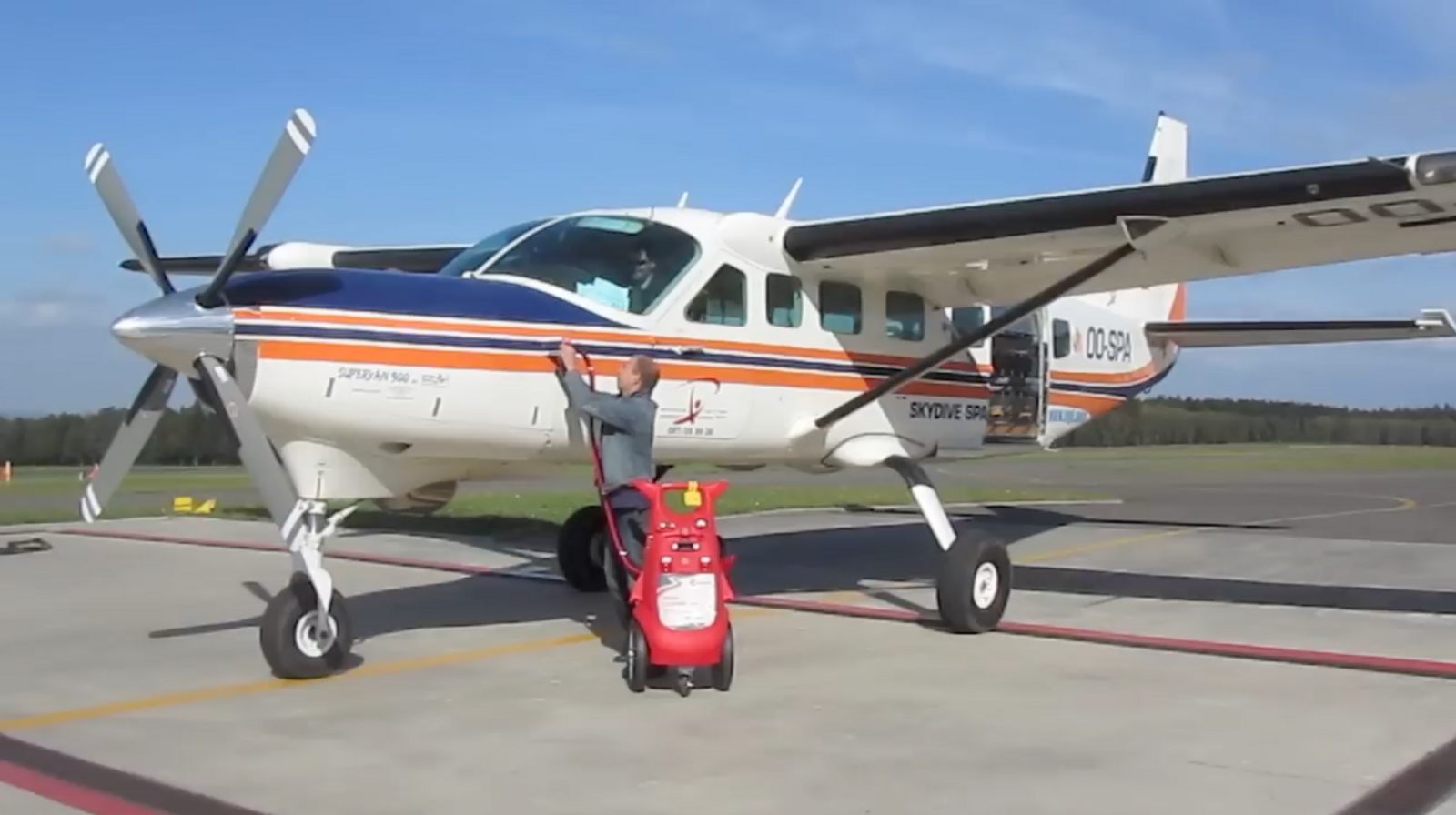
Video[edit | edit source]
This video demonstrates how to jump start an aircraft using the RESCUE 2020: